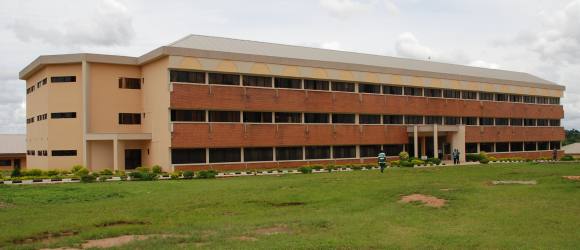
BRIEF HISTORY OF THE DEPARTMENT
The Department of MATHEMATICAL and PHYSICAL SCIENCES is one of the pioneer Departments in the College of Science, Engineering and Technology of Osun State University, established at the inception of the University in September, 2007. The Department offers two degree programmes, namely
• B.Sc. Mathematics and
• B.Sc. Physics with Electronics
There are four functional laboratories in the Department that serve the academic programmes of the Department. The laboratories are well equipped to cope with teaching of students and for the use of academic staff for research purposes.
The students registered in the Department offer similar courses at the 100 level but start to offer courses in their chosen disciplines from the 200 level. At the 300 level Rain Semester, all students in the Department are required to proceed on six months Student Industrial Work Experience Scheme (SIWES) as part of their graduation requirement.
The two programmes of the Department operate academic curricular that are tailored along the stipulations contained in the National Universities Commission (NUC) Benchmark Minimum Academic Standards.
PHILOSOPHY AND OBJECTIVES
PHILOSOPHY
The philosophy, aims and objectives of the B.Sc. Degree programmes in Mathematics and Physics with Electronics are as follows:
Mathematics
i) Instill in students a sense of enthusiasm for Mathematics, an appreciation of their application in different areas and to involve them in an intellectually stimulating and satisfying experience of learning and studying.
ii) Provide students with a broad and balanced foundation of knowledge and practical skills in mathematics.
iii) Develop in students the ability to apply their mathematics knowledge and skills to the solution of theoretical and practical problems in mathematics.
iv) Develop in students, through an education in mathematics, a range of transferable skills and attitudes that are of value in mathematical related and non-mathematical related employment.
v) Provide students with knowledge and skills base from which they can proceed to further in specialized areas of mathematics or multidisciplinary areas involving mathematics.
vi) Generate in students an appreciation of the importance of mathematics in an industrial, economic, environmental, technological and social context.
Physics with Electronics
i) Instill in students a sense of enthusiasm for Physics, and an appreciation of its application and relevance in different context.
ii) Provide students with a broad and balanced foundation of physics knowledge and practical skills.
iii) Involve the students in intellectually stimulating and satisfying experience of learning and studying.
iv) Develop in students the ability to apply their knowledge and skills in physics to the solution of theoretical and practical problems.
v) Develop in students, through an education in physics, a range of transferable skills and attitudes that are of value in physics and other areas.
vi) Provide students with a knowledge and skills base for further studies in physics or multi-disciplinary areas involving physics.
ADMISSION REQUIREMENTS
GENERAL
For admission into any of the first degree programmes of the University, a candidate shall be required to possess the following minimum qualifications:
1. Senior Secondary School Certificate (SSCE) or its equivalents with credit level passes in five (5) subjects at not more than two sittings. The candidate must also earn an acceptable score in the Unified Tertiary Matriculation Examination (UTME).
2. Candidates seeking admission by direct entry into the 200 level, must have at least five (5) O/L credits, two of which must be at Advanced Level or approved equivalents.
DEPARTMENTAL ADMISSION REQUIREMENT
U.M.E. Candidates
B.Sc. Mathematics
For admission into the first degree programme in Mathematics, a candidate must have the Senior Secondary School Certificate (SSCE) or its equivalents with credit level passes in five (5) subjects: English Language, Mathematics, Physics to form the core subjects, with credit in two other relevant science subjects at not more than two sittings. The candidate must also earn an acceptable score in the Unified Tertiary Matriculation Examination (UTME).
B.Sc. Physics
For admission into the first degree programme in Physics with Electronics, a candidate must have the Senior Secondary School Certificate (SSCE) or its equivalents with credit level passes in five (5) subjects: English Language, Mathematics, Physics and Chemistry to form the core subjects, with credit in one other relevant science subject at not more than two sittings. The candidate must also earn an acceptable score in the Unified Tertiary Matriculation Examination (UTME).
Direct Entry Candidates
B.Sc. Mathematics
Candidates seeking admission by direct entry into the 200 level Mathematics programme, must have Advanced Level passes in at least two (2) of the following: Mathematics, Further Mathematics, Physics and Chemistry, in addition to credit level passes in five of the subjects listed in 3.2.1 above at the SSCE or its equivalents. Candidates with ND and approved equivalents in relevant fields with at least a lower credit may be considered for direct entry into the programme. Candidates with acceptable pass in the UNIOSUN Foundation Programme are also eligible for admission into the 200 level, provided they possess the requisite qualification for entry into the 100 level of the programme.
B.Sc. Physics
Candidates seeking admission by direct entry into the 200 level Physics with Electronics programme, must have Advanced Level passes in at least two (2) of the following: Physics, Mathematics Biology or Botany, Chemistry and Geography, in addition to credit level passes in five of the subjects listed in 3.2.1 above at the SSCE or its equivalents. Candidates with ND and approved equivalents in relevant fields with at least a lower credit may be considered for direct entry into the programme. Candidates with acceptable pass in the UNIOSUN Foundation Programme are also eligible for admission into the 200 level, provided they possess the requisite qualification for entry into the 100 level of the programme.
Post UTME Screening
All Candidates seeking admission into the University irrespective of their UTME scores shall be required to pass the University post UTME Screening test before being admitted.
Registration Procedure
(a) Students shall normally complete registration at the beginning of the semester.
(b) Any addition or deletion from the courses for which a student is formally registered must be made with the consent of the course coordinator.
(c) A student may be allowed to withdraw from a course by the course administrator before a third of lectures have been given. Such a student who withdraws after this time or who fails to sit for examination without reasons acceptable to the appropriate Faculty/College Board shall be deemed to have failed the course. A Grade point of 0F shall be recorded for the student in the course.
(d) Late registration in the course may be allowed with penalty of up to 4 weeks after the commencement of registration.
Duration of Degree Programmes
The minimum number of years to be spent to be awarded a first degree in a programme of study in non-professional area in the university shall be four years (or three years minimum for direct entry candidates). Registration shall not exceed an additional 50% of the duration of the programme if the student fails to graduate within the minimum number of years.
Graduation Requirements
To qualify for the award of a degree of the Osun State University, a student is required to have:
(i) completed and passed the prescribed number of units including all compulsory courses specified by the University.
(ii) completed and met the standards for all required and optional courses.
(iii) obtained the prescribed minimum CGPA.
BRIEF HISTORY OF THE DEPARTMENT
The Department of INFORMATION AND COMMUNICATION TECHNOLOGY is one of the pioneer Departments in the College of Science, Engineering and Technology of Osun State University, established at the inception of the University in September, 2007. The Department offers B.Sc. Degree programme in Computer Science with plans to offer two additional programmes at the second phase of development.
There are three functional laboratories in the Department that serve the academic programme of the Department. The laboratories are well equipped to cope with the teaching of students and for the use of academic staff for research purposes.
The students registered in the Department offer same courses at the 100 level but start to offer courses in their chosen disciplines from the 200 level. At the 300 level Rain Semester, all students in the Department are required to proceed on six-months Student Industrial Work Experience Scheme (SIWES) as part of their graduation requirement.
The academic programme of the Department operates academic curricular that are tailored along the stipulations contained in the National Universities Commission (NUC) Benchmark Minimum Academic Standards.
PHILOSOPHY AND OBJECTIVES
PHILOSOPHY
The B.Sc. Computer Science degree is conceived as a vehicle for serious academic learning and research geared toward development from theory of computing to application of information technology that will be beneficial to the community, industry, government and the country at large; with a strong desire to achieve an enviable level of professionalism and entrepreneurship while maintaining good academic background germinating into valuable industry-university relationship.
OBJECTIVES
The purpose, aims and objectives of the programme are to:
i) Create in students the awareness of and enthusiasm for computer science and its capabilities.
ii) Involve the students in an intellectually stimulating and satisfying experience of learning and studying.
iii) Provide a broad and balanced foundation in computer science knowledge and practical skills.
iv) Develop in students through an education in computer science a range of transferable skills of information and communication technology to all aspects of human endeavours.
v) Generate in students an appreciation of the importance of computer in an industrial, economic, environmental, technological and social development.
vi) Provide students with knowledge and skills base for further studies in computer science or multi-disciplinary studies involving computer science.
ADMISSION REQUIREMENTS
GENERAL
For admission into any of the first degree programmes of the University, a candidate shall be required to possess the following minimum qualifications:
1. Senior Secondary School Certificate (SSCE) or its equivalents with credit level passes in five (5) subjects at not more than two sittings. The candidate must also earn an acceptable score in the Unified Tertiary Matriculation Examination (UTME).
2. Candidates seeking admission by direct entry into the 200 level, must have at least five (5) O/L credits, two of which must be at Advanced Level or approved equivalents.
DEPARTMENTAL ADMISSION REQUIREMENT
U.M.E. Candidates
For admission into the first degree programme in Computer Science, a candidate must have the Senior Secondary School Certificate (SSCE) or its equivalents with credit level passes in five (5) subjects: English Language, Mathematics, Physics, Chemistry to form the core subjects, with credit in any other Science subject at not more than two sittings. The candidate must also earn an acceptable score in the Unified Tertiary Matriculation Examination (UTME).
Direct Entry Candidates
Candidates seeking admission by direct entry into the 200 level Computer Science programme, must have Advanced Level passes in at least Mathematics and Physics, in addition to credit level passes in five of the subjects listed in 3.2.1 above at the SSCE or its equivalents. Candidates with ND and approved equivalents in relevant fields with at least a lower credit may be considered for direct entry into the programme. Candidates with acceptable pass in the UNIOSUN Foundation Programme are also eligible for admission into the 200 level, provided they possess the requisite qualification for entry into the 100 level of the programme.
Post UTME Screening
All Candidates seeking admission into the University irrespective of their UTME scores shall be required to pass the University post UTME Screening test before being admitted.
Registration Procedure
(a) Students shall normally complete registration at the beginning of the semester.
(b) Any addition or deletion from the courses for which a student is formally registered must be made with the consent of the course coordinator.
(c) A student may be allowed to withdraw from a course by the course administrator before a third of lectures have been given. Such a student who withdraws after this time or who fails to sit for examination without reasons acceptable to the appropriate Faculty/College Board shall be deemed to have failed the course. A Grade point of 0F shall be recorded for the student in the course.
(d) Late registration in the course may be allowed with penalty of up to 4 weeks after the commencement of registration.
Duration of Degree Programmes
The minimum number of years to be spent to be awarded a first degree in a programme of study in non-professional area in the university shall be four years (or three years minimum for direct entry candidates). Registration shall not exceed an additional 50% of the duration of the programme if the student fails to graduate within the minimum number of years.
Graduation Requirements
To qualify for the award of a degree of the Osun State University, a student is required to have
(i) completed and passed the prescribed number of units including all compulsory courses specified by the University.
(ii) completed and met the standards for all required and optional courses.
(iii) obtained the prescribed minimum CGPA.
Head of Department’s Welcome Address/Introduction:
On behalf of the Department of Pure and Applied Chemistry (PAC), I welcome you to our website. Our vision is to continue to grow in student population, staff strength, infrastructural development and research output. We realize how honourable our job is and the need to build a generation fortified with scientific knowledge, skills and comprehensive education in chemistry. Thus, we are committed and dedicated to this vision. PAC as a Department offers students some ways to engage with knowledge of Chemistry, including two bachelor’s degree programmes (B.Sc. Chemistry and B.Sc. Industrial Chemistry), some postgraduate programmes in Chemistry and hands-on research opportunities. The Department is equipped with a wide range of modern instrumentation necessary for the successful completion of any of our programmes.
We are privileged to have academic staff members whose research interests cut across nearly all the traditional sub-disciplines of chemistry. Over the years, we have built a reputation for a strong interdisciplinary research. No wonder our graduates all over the country and in the diaspora are having enviable careers in chemistry and beyond.
I wish you a productive and informative session as you take the time to browse our website. Do not hesitate to contact us if you have any questions.
– Dr. Adebanjo J. Anifowose
Ag. Head of the Department
Location:
Osogbo
Brief History:
At the inception of the University in September 2007, the pioneer Department started as the Department of Geological and Chemical Sciences which offered B.Sc. degrees in Geology, Industrial Chemistry and Biochemistry. The Department started with six pioneer staff (3 academic and 3 technical) and 10 students in 2007. The Department of Geological and Chemical Sciences was unbundled in the year 2012 into two: the Department of Geological Sciences (for B.Sc. Geology) and the Department of Chemical Sciences. This same year, the Department of Chemical Sciences added B.Sc. Chemistry to its programmes. In March 2018, the Department of Chemical Sciences was further split into two: the Department of Pure and Applied Chemistry and the Department of Biochemistry. The Department of Pure and Applied Chemistry (PAC) has been successfully running its academic degree programmes without losing any accreditation by the National University Commission (NUC). Today, the Department has grown in student and staff population, as well as infrastructural strength. This development is the springboard and solid foundation for the kick-off of postgraduate programmes in 2019, which have successfully produced quite a number of M.Sc. and PhD graduates.
Mission:
Our mission is to teach, train and transform our students into well-sought professionals, with sound knowledge of scientific principles and methods, who can compete favourably with their global counterparts for employment and research developments.
Vision:
Our vision is to be a centre of excellence in providing high-quality teaching and learning experiences in Pure and Applied Chemistry. This will result in giving back to the society thorough-bred entrepreneurial graduates who can engage in impactful research, as well as provide necessary social, industrial, environmental and scientific solutions that can lead to job creation.
Physical Development:
We have three functional laboratories that serve the academic programmes of the Department. The laboratories are well-equipped for undergraduate practical work and projects, as well as cutting-edge research activities for postgraduate studies. All the staff members have offices that are well-equipped with the required and necessary facilities. Adequate classrooms and seminar rooms are provided for the teaching and learning of the students. The library is well-equipped with modern facilities and up-to-date books, publications and periodicals necessary for teaching and learning.Research Activities:The Department has been a leading element in advancing frontiers in research and knowledge within and outside Nigeria. Many members of the Department have published in reputable international journals. The Department has cordial relationships with the Chemical Society of Nigeria (CSN), the Institute of Chartered Chemists of Nigeria (ICCON) the American Chemical Society (ACS) and other research bodies. Our research activities include: Synthesis of green nanoparticles (GNPs) and their applications in water treatment Environmental assessment of petroleum hydrocarbons and heavy metals from petroleum service stations on nearby soil and groundwater in Osogbo, Osun state Antioxidants, antimicrobial, anti-glycemic activities of synthesized calcium nanoparticles, zinc nanoparticles from leaf extract of Annona muricata Microplastics abundance and associated pollutants in vegetables: Implications on nutritional composition and bioactive components Measurement and toxicities of organochlorine pesticides (OCPs) in fish organs: A case study of Nile tilapia and spotted catfish harvested from Otin-River Heavy metals in the sediment and water: Sources, ecological and human health risk Applications of Adansonia digitata, Ceiba pentandra and Ceratotheca sesamoids leaf- hydrocolloids as Rheology Modifier and Phytochemical agents in selected Human Diseases Management and control Investigation of the influence of fermentation on the nutritional values, functional properties and rheological attributes of soybeans Gold mining and its toxicity in aquatic habitat: Underscoring the importance of assessment
Journals:
Some selected publications for the passing year in reputable journals by members of staff of the Department are listed below:
1. Adebanjo Jacob Anifowose, Alaru Kunle Gbadamosi , Tinuola Munirat Oguntope , Omoteleola Serah Olarinde , Oluwaferanmi Samuel Fasoiro , Shola Hezekiah Awojide (2024). First forensic quantification, source-identification and health risk estimation of volatile organic carbons in the anthropogenically impacted Omi-Asoro Stream in Ilesa, Nigeria. Cleaner Water. https://doi.org/10.1016/j.clwat.2023.100002. Published by Elsevier.
2. Babalola, B. M., Afolabi, S. O., Afolabi, V. O., Arogundade, I. O., Adefisan, A. O. and Anifowose, A. J. (2024). Effect of chemical modifications on the adsorptive ability of palm kernel fibre for indigo blue dye. Lafia Journal of Scientific and Industrial Research, 2(1), 33–39. https://doi.org/10.62050/ljsir2024.v2n1.284. Published by the Faculty of Science, Federal University of Lafia, Nasarawa State, Nigeria.
3. Azeez L., Oyedeji A.O., Adedotun I.S., Adeleke A.E. (2024). Nanotechnology to monitor, remedy, and prevent pollution: An overview. Chapter 2. In (Eds): Bilal M., Iqbal H.F.M., Nguyen T.A., Yasin G., Gupta R.M. Nanotechnology to Monitor, Remedy, and Prevent Pollution. 25 – 42. https://doi.org/10.1016/B978-0-443-15660-1.00002-2. Published by Elsevier.
4. Azeez L., Oyinlola A., Oyedeji A.O., Agbaogun B.K., Busari H.K., Adejumo A.L., Agbaje W.B., Adeleke A.E., Awolola O.S. (2024). Facile removal of rhodamine B and metronidazole with mesoporous biochar prepared from palm tree biomass: adsorption studies, reusability, and mechanisms. Water Practice and Technology. 19(4), 730 – 744. Published by International Water Association. Impact factor – 1.6.
5. Aremu H.K., Oyewole O.I., Adenmosun A., Oyafajo L., Iwalewa Z.I., Ademola A., Azeez L., Adeleke M.A. (2024). Bioactive components in Psidium guajava extracts elicit biotoxic attributes and distinct antioxidant enzyme modulation in the larvae of vectors of lymphatic filariasis and dengue. Experimental Parasitology 261: 108766. https://doi.org/10.1016/j.exppara.2024.108766. Published by Elsevier. Impact Factor 1.4
6. Yusuf-Omoloye N.A., Adeyemi F.M., Sule W.F., Azeez L., Oyedara O.O. Wahab A.K., Ajigbewu O.H., Lateef A. (2024). Green-synthesis, characterization, and antibacterial activity of Azanza garckeana seed extract silver nanoparticles against vancomycin-resistant Enterococci. Next Nanotechnology. 6, 100035. https://doi.org/10.1016/j.nxnano.2023.100035. Published by Elsevier.
7. Oyedeji A.O., Odeyemi B.A., Azeez L. (2024). Dietary risk assessment of cyromazine and its analogue melamine in evaporated and infant milk samples in Nigeria. Journal of Food Quality and Hazards Control. 11: 39-46. Published by Shahid Sadoughi University of Medical Sciences, Yazd, Iran.
8. Aremu H.K., Dare C.A., Adekale I.A., Adetunji B.D., Musa D.A., Azeez L., Oyewole O.I. (2024). Phytomediated stress modulates antioxidant status, induces overexpression of CYP6M2,Hsp70, α-esterase, and suppresses the ABCtransporter in Anopheles gambiae (sensu stricto) exposed to Ocimumtenuiflorumextracts. PLoSONE 19(5): e0302677. https://doi.org/10.1371/journal.pone.0302677
9. Shola Hezekiah Awojide, Ezekiel OlumideFadunmade, Adeola Adepeju Adegboye, Kehinde Adenike Oyewole, Ifeoluwa Samuel Adedotun, Abayomi Gideon Adeyemo and Jesutofunmi Victoria Ayeni (2024). A comparative study on the synergistic activities of fractions and crude essential oil of Syzygiumaromaticum. Bulletin of the National Research Centre (2024) 48:47 https://doi.org/10.1186/s42269-024-01205-2
10. K. A. Fasasi, O. F. Awodiran, D. J. Ayeni1, O. I. Awoniyi, and S. H. Awojide (2024). Assessment of Bee Honey in some Districts in South-Western Nigeria for Agricultural Pesticide Residues and Polycyclic Aromatic Hydrocarbons (PAHs). The Journal of Agricultural Sciences - Sri Lanka Vol. 19, No 1, January 2024. Pp 142-15.
11. Dada A. O., Inyinbor A.a., Tokula B. E., Ajanaku C. O., Ayo-Akere, Latona D.F. (2024). Sustainable Chitosan Supported Magnetite Nanocomposites for Sequestration of Rhodamine B Dye from the environment. IOP Conference Series Earth and Environmental Science. 1342, 1,012013.
12. Adetoro R.O., Shittu M. O. A.; Adetayo-Balogun A.A.; Okedinachi P. A. and Amuda O.S. (2024). Kinetic Studies of Periwinkle Shell Hydroxyapatite (PSHAP) for the Removal of Metal Ions in Steel Rolling Mill Wastewater. Research Journal of Pure Science and Technology, 7(2): 37-49. DOI: 10.56201/rjpst.v7.no2. 2024. Published by International Institute of Academic Research and Development.
13. Adejumo, A. L., Basiru, S.O., Adeleke, A. E.,Adetoro, R. O.,Aremu,H. K.,Owolabi, S. O. and Azeez, L. (2024a).Potential Consequences of Water-Soluble Acetaminophen-Chromium Combination in Clarias Gariepinus: Bioaccumulation and Oxidative Perturbations of Antioxidant Enzyme Activities.Fountain Journal of Natural and Applied Sciences, 13(1): 73 – 87. DOI: 10.53704/fujnas.v13i1.562. Published by College of Natural and Applied Sciences, Fountain University, Osogbo, Nigeria.
14. Adejumo, A.L., Adetoro, R.O., Oladejo, A.A., Kolawole, T.O., Oyedeji, A.O., Adeleke, E.A., Oke, A.M. Awolola O.S., Isola O.E., Azeez, L. (2024b). Risk Evaluation Associated with Abelmuscus EsculentusConsumption Grown on Decommissioned Goldmine Sediment and Water. Fountain Journal of Natural and Applied Sciences, 13(2): 12-22. DOI: 10.53704/fujnas.v13i2.566. Published by College of Natural and Applied Sciences, Fountain University, Osogbo, Nigeria.
15. Azeez L., Lateef A., Adelere I. A. (2024). Environmental behaviuor and fate of nanomaterials in soil – plant interaction, In: Microbiome and nano-cross-Talk, pp. 149–186. DOI: 10.1016/B978-0-443-18822-0.00007-4. Published by Elsevier
16. Azeez L., Adejumo A. L. Oladejo A. A., Olalekan B., Basiru S., Oyelami O. K., Makanjuola A. O., Ogungbe V. Hammed A., Abdullahi M. (2024). Exploiting the synergistic influence of AgNPs-TiO2NPs: enhancing phytostabilization of pb and mitigating its toxicity in Vigna unguiculata. International Journal of Phytoremediation. Published by Taylor & Francis.
Grants and Awards:
Many academic staff in the Department have won individual scholarship awards for their PhD programmes. Striking research grants won by members of the Department include:
(i) Research Project: Development of Artificial Neural Network-based Model for Estimating Nano and Microplastic Pollution in Water. (ongoing).
Sponsor: National Research Fund TeTFund, Nigeria (Reference No: TETF/ES/DR&D-CE/NRF2021/SETI/WAS/00091/VOL1. 2022).
Prinicipal Investigator: Dr. Luqmon A. Azeez
Co-Investigator: Dr. Adebanjo J. Anifowose
(ii) Research Project: Innovative microbial volarization of keratinous wastes for eco-friendly production of protein-rich keratin hydrolysates (PROKESH) as biofertilizers. (ongoing).
Sponsor: National Research Fund TeTFund, Nigeria.
Prinicipal Investigator: Prof. Lateef Agabje
Co-Investigator: Dr. Luqmon A. Azeez
(iii) Research Project: Multi-omics approach to heavy metal toxicity and ameliorating potential of green nanoparticles in goldmining areas. (ongoing).
Sponsor: National Research Fund TeTFund, Nigeria.
Prinicipal Investigator: Dr. Wahab Oyeyemi
Co-Investigator: Dr. Luqmon A. Azeez
(iv) Research Project: Development of a novel fluorometric method for the determination of production rate and steady-state concentration of photochemically generated superoxide radicals in seawater. (completed)
Sponsor: Japan Society for the Promotion of Science KAKENHI (Project ID: 18310010)
Prinicipal Investigator: Prof. Hiroshi Sakugawa, Hiroshima University, Japan.
Co-Investigator: Dr. Adebanjo J. Anifowose
Community Empowerment Service Project:
Air quality assessment of the campuses of Osun State University
Production of liquid soap and hand sanitizer during Corona virus for all the campuses of Osun State University
Water quality assessment of the commercial UNIOSUN water
BRIEF HISTORY OF THE DEPARTMENT
The Department of GEOLOGICAL SCIENCES is one of the pioneer Departments in the College of Science, Engineering and Technology of Osun State University, established at the inception of the University in September, 2007. The Department currently offers one degree programme, B.Sc. Geology.
There are three functional laboratories in the Department that serve the academic programmes of the Department. The laboratories are well equipped to cope with teaching of students and for the use of academic staff for research purposes.
Classrooms and Lecture rooms are shared with other Departments in the College.
The students registered in the Department offer similar courses at the 100 level but start to offer courses in their chosen disciplines from the 200 level. At the 300 level Rain Semester, all students in the Department are required to proceed on six-months Student Industrial Work Experience Scheme (SIWES) as part of their graduation requirement.
The programme of the Department operate academic curricula that are tailored along the stipulations contained in the National Universities Commission (NUC) Benchmark Minimum Academic Standards.
PHILOSOPHY AND OBJECTIVES
PHILOSOPHY
The undergraduate programme in Biochemistry and Industrial Chemistry is designed to encompass an appreciation of the centrality of chemical sciences in the entire undergraduate curricula. It is planned to arouse entrepreneurial spirits needed for employment and economic emancipation.
The undergraduate programme in Geology is designed to equip the students with the ability to apply knowledge and skills to solving theoretical and practical problems in the exploration and exploitation of natural earth resources and also be able to carry out research in Geo-Sciences.
OBJECTIVES
The aims and objectives of the programmes are to:
i) Instill in students a sense of enthusiasm for Geology, an appreciation of its application and relevance in the solution of different societal developmental problems, and to involve them in an intellectually stimulating and satisfying experience of learning and studying.
ii) Provide students with a broad and balanced foundation of geological knowledge and practical skills.
iii) Develop in students the ability to apply their geological knowledge and skills to the solution of theoretical and practical problems in geology.
iv) Develop in students, a range of transferable skills and attitudes that are of value in geological and non-geological employment.
v) Provide students with knowledge and skills base from which they can proceed to further in specialized areas of geology or multidisciplinary areas involving geology.
vi) Generate in students an appreciation of the importance of geology in an industrial, economic, environmental, technological and social development.
ADMISSION REQUIREMENTS
GENERAL
For admission into any of the first degree programmes of the University, a candidate shall be required to possess the following minimum qualifications:
1. Senior Secondary School Certificate (SSCE) or its equivalents with credit level passes in five (5) subjects at not more than two sittings. The candidate must also earn an acceptable score in the Unified Tertiary Matriculation Examination (UTME).
2. Candidates seeking admission by direct entry into the 200 level, must have at least five (5) O/L credits, two of which must be at Advanced Level or approved equivalents.
DEPARTMENTAL ADMISSION REQUIREMENT
U.M.E. Candidates
For admission into the first degree programme in Geology, a candidate must have the Senior Secondary School Certificate (SSCE) or its equivalents with credit level passes in five (5) subjects: English Language, Mathematics, Chemistry, Physics to form the core subjects, with credit in any of the following: Biology/Agricultural Science and Geography at not more than two sittings. The candidate must also earn an acceptable score in the Unified Tertiary Matriculation Examination (UTME).
Direct Entry Candidates
Candidates seeking admission by direct entry into the 200 level Geology programme, must have Advanced Level passes in at least two (2) of the following: Chemistry, Mathematics and Physics, in addition to credit level passes in five of the subjects listed in 3.2.1 above at the SSCE or its equivalents. Candidates with ND and approved equivalents in relevant fields with at least a lower credit may be considered for direct entry into the programme. Candidates with acceptable pass in the UNIOSUN Foundation Programme are also eligible for admission into the 200 level, provided they possess the requisite qualification for entry into the 100 level of the programme.
Post UTME Screening
All Candidates seeking admission into the University irrespective of their UTME scores shall be required to pass the University post UTME Screening test before being admitted.
Registration Procedure
(a) Students shall normally complete registration at the beginning of the semester.
(b) Any addition or deletion from the courses for which a student is formally registered must be made with the consent of the course coordinator.
(c) A student may be allowed to withdraw from a course by the course administrator before a third of lectures have been given. Such a student who withdraws after this time or who fails to sit for examination without reasons acceptable to the appropriate Faculty/College Board shall be deemed to have failed the course. A Grade point of 0F shall be recorded for the student in the course.
(d) Late registration in the course may be allowed with penalty of up to 4 weeks after the commencement of registration.
Duration of Degree Programmes
The minimum number of years to be spent to be awarded a first degree in a programme of study in non-professional area in the university shall be four years (or three years minimum for direct entry candidates). Registration shall not exceed an additional 50% of the duration of the programme if the student fails to graduate within the minimum number of years.
Graduation Requirements
To qualify for the award of a degree of the Osun State University, a student is required to have:
(i) completed and passed the prescribed number of units including all compulsory courses specified by the University.
(ii) completed and met the standards for all required and optional courses.
(iii) obtained the prescribed minimum CGPA.
History | Educational Objectives | Programme Outcomes | Learning Outcomes | Staff List
BRIEF HISTORY OF THE DEPARTMENT
The Department of Electrical and Electronic Engineering of the Osun State University is one of the two pioneering engineering departments under the College of Science, Engineering and Technology established in 2007/2008 academic session as part of the first phase of development of the University.
The department runs a 5-year programme, operating 2-semester course units system in its curriculum that leads to the award of Bachelor of Engineering (B.Eng.) degree in Electrical and Electronic Engineering. The 5-year duration is expected to progress from year-one (100 level) through year-five (500 level). Each year is divided into two semesters (Harmattan and Rain), each of 17-18 weeks duration which comprises 2 weeks of registration, 13 weeks of lecture and 2-3 weeks of examination.
The department operates academic curriculum that is tailored along stipulations contained in the National University Commission (NUC) and the Council for the Regulation of Engineering in Nigeria, COREN Benchmark Minimum Academic Standards, BMAS documents. The Department has been graduating students since 2012 and has always maintained an enrollment figure which is in line with the carrying capacity for Electrical and Electronic Engineering programme specified in the COREN BMAS document. This policy allows for the realization of the philosophy and objectives of the programme through proper utilization of facilities and equipment for teaching and research in the laboratories.
The Programme Educational Objectives for the Electrical and Electronic Engineering undergraduate programme are to produce graduates who in a few years of graduation will:
PEO 1 Bring their fundamental knowledge of principles in mathematics, science and engineering to bear on the challenges they take on, developing and applying appropriate models, technical tools, and evaluations to come up with their solutions.
PEO 2 Bring to their careers the self-assurance, integrity, and technical strengths that drive innovation, and the communication and collaboration skills to inspire and guide the groups they work with in bringing their ideas to fruition.
PEO 3 Apply their abilities, talents, and insights creatively and productively in fields and professions beyond those explicitly represented in, or anticipated by, the curriculum.
PEO 4 Be sensitive to professional and societal contexts, committed to ethical action, and engaged in life-long learning (including studies leading to professional certification or an advanced degree in engineering) to remain effective members of the communities.
The PEOs were formulated in line with the mission statement of the University- “to create a unique institution committed to the pursuit of academic innovation, skill-based training and a tradition of excellence in teaching, research and community service. The PEOs-Mission mapping matrix shown in Table 1 shows the contribution of the PEOs to the realization of the mission of the University.
Table 1: Mapping of PEOs to Mission of University
|
PEOs |
University’s Mission |
||
|
Academic Innovation (Teaching and Research) |
Skill-based training |
Community Service |
|
|
PEO 1 |
x |
x |
x |
|
PEO 2 |
x |
x |
x |
|
PEO 3 |
x |
x |
|
|
PEO 4 |
x |
x |
|
The Department also gets adequate feedback from other stakeholders such as employers of our graduates, industries, alumni of the programme as well as parents/guardians. This information provides the basis for evaluation of the PEOs.
The programme outcomes are statements of the knowledge, skills and behaviours that students are expected to have by the time they graduate. The POs for the Electrical and Electronic Engineering undergraduate programme are the same as those approved by COREN. These include the ability to:
a) apply knowledge of mathematics, science, engineering fundamentals in Electrical and Electronic Engineering to the solution of developmental and complex engineering problems;
b) identify, formulate, research literature and analyze developmental and complex engineering problems reaching substantiated conclusions using first principles of mathematics, natural sciences and engineering sciences;
c) proffer solutions for developmental or complex engineering problems and design systems, components or processes that meet specified needs with appropriate consideration for public health and safety, cultural, societal, and environmental considerations;
d) conduct investigation into developmental or complex problems using research-based knowledge and research methods including design of experiments, analysis and interpretation of data, and synthesis of information to provide valid conclusions;
e) create, select and apply appropriate techniques, resources, and modern engineering and ICT tools, including prediction, modeling and optimization to developmental and complex engineering activities, with an understanding of the limitations;
f) apply reasoning informed by contextual knowledge including Humanities and Social Sciences to assess societal, health, safety, legal and cultural issues and the consequent responsibilities relevant to engineering practice;
g) understand the impact of professional engineering solutions in societal and environmental contexts and demonstrate knowledge of and need for sustainable development;
h) apply ethical principles and commit to professional ethics and responsibilities and norms of engineering practice, including adherence to the COREN Engineers Code of Conducts;
i) function effectively as an individual, and as a member or leader in diverse teams and in multi-disciplinary settings;
j) communicate effectively on developmental or complex engineering activities with the engineering community and with society at large, such as being able to comprehend and write effective reports and design documentation, make effective presentations, and give and receive clear instructions;
k) demonstrate knowledge and understanding of engineering, management and financial principles and apply these to one’s own work, as a member and leader in a team, to manage projects and in multi-disciplinary environments; and
l) recognize the need for, and have the preparation and ability to engage in independent and life-long learning in the broadest context of technological and social changes.
General
For admission into first degree programmes of the University, a candidate shall be required to possess the following minimum qualification:
1. Senior School Certificate Examination (SSCE) or its equivalents with credit passes in five (5) subjects at not more than two sittings. The candidate must also earn an acceptable score in the Unified Tertiary Matriculation Examination (UTME).
2. Candidates seeking admission by direct entry into the 200 level must have at least five (5) O/L credits, two of which must be at Advanced level or approved equivalents.
3.2 Departmental Admission Requirement
Requirements for admission into Electrical and Electronics Engineering programme are guided by the University policy on admission and in accordance with the NUC guidelines.
U.T.M.E. Requirements
To qualify for admission into the programme in the Department, a candidate must possess at least five (5) credit passes in SSCE or NECO (O’ Level), obtained at not more than two sittings, which must include the following subjects: English Language, Mathematics, Physics, Chemistry and any other Science subject.
Candidates with acceptable passes in the Pre-Degree Programme Examination of the Osun State University and that have an acceptable pass in the UTME may also be admitted into the 5-year degree programme of the Department.
Direct Entry Requirements
Candidates with passes at the Advanced Level (A-Level) in relevant subjects, which must include Mathematics, Physics and Chemistry and those with OND, NCE (Upper Credit) and HND (minimum of lower Credit) from any higher institution recognized by the University Senate may be admitted into the 200-level, provided such candidate fulfill the UTME admission requirements of the Department. Candidates with acceptable passes in the Advanced Diploma Programme of Osun State University may also be admitted into the 200-level, provided such candidate fulfill the UTME admission requirements of the Department.
Post UTME Screening
All candidates seeking admission into the University shall be required to pass the University Post UTME Screening test before being admitted.
Registration Procedure
(a) Students shall normally complete registration at the beginning of the semester.
(b) Any addition or deletion from the courses for which a student is formally registered must be made with the consent of the consent of the course coordinator.
(c) A students may be allowed to withdraw from a course by the course administrator before a third of lectures have been given. Such a student who withdraws after this time or who fails to sit for examination without reasons acceptable to the appropriate Faculty/College Board shall be deemed to have failed the course. A grade point of 0 F shall be recorded for the student in the course.
(d) Late registration in the course may be allowed with penalty of up to 4 weeks after the commencement of registration.
Duration of Degree Programmes
The minimum duration for the Bachelor of Engineering (B.Eng) programme is 10 semesters. Direct entry candidates with ND, NCE and equivalents shall have minimum duration of 8 semesters while those with HND shall have minimum duration of 6 semesters.
Graduation Requirements
To qualify for the award of a degree of the Osun State University, a student is required to have:
(i) completed and passed the prescribed number of units including all compulsory courses specified by the University.
(ii) completed and met the standards for all required and optional courses.
(iii) obtained the prescribed minimum CGPA.
List of Staff (View All)
S/N Name Designation
1. Dr. H. Lasisi Senior Lecturer/Acting HOD
2. Prof. M.O. Omoigui Professor (Contract)
3. Prof. L.O. Kehinde Professor (Adjunct)
4. Prof. O.A. Komolafe Professor (Sabbatical)
5 Dr. M.F. Akorede Associate Professor (Sabbatical)
6. Dr. (Mrs.) F.A. Semire Senior Lecturer (Sabbatical)
7. Dr. T.O. Ajewole Senior Lecturer
8. Dr. O.O. Obiyemi Senior Lecturer
9. Dr. T.A. Abdul-Hameed Senior Lecturer (Adjunct)
10. Dr. M.O. Lawal Lecturer I
11. Dr. K.O. Alawode Lecturer I
12. Engr. O. Oladepo Lecturer I
13. Engr. T.T. Awofolaju Lecturer I
14. Mr. M.O. Bada Assistant Lecturer
15. Miss B.A. Adewumi Graduate Assistant
16. Mr. M.O. Oyedeji Graduate Assistant
17. Mrs. B.M. Ojuola, Engn. Tech. Principal Technologist
18. Mr. A.O. Esho Senior Technologist
19. Engr. I.O. Aiyedun Senior Technologist
20. Engr. O. Akinwale Technologist II
21. Mr. T.O. Balogun Technologist II
22. Miss O.R. Olowu Technologist II
23. Mr. S.O. Olatona Technologist II
24. Mrs. V.A. Ogunjobi Confidential Secretary I
25. Mrs. F.T. Omotosho Senior Office Assistant
26. Mr. I.A. Taleatu Office Assistant
Engineering Alumni Survey
https://forms.gle/D35TyRSHCjC3s9kQ6
Employers’ Evaluation Form
https://forms.gle/JbfUEtEV9A5mjQw27
BRIEF HISTORY
PHILOSOPHY
MISSION AND VISION
PROGRAMME EDUCATIONAL OBJECTIVES
PROGRAMME OUTCOMES
ADMISSION REQUIREMENTS
STAFF
LEVEL ADVISERS
EXAMINATION TIMETABLE
LECTURE NOTES
BRIEF HISTORY OF THE DEPARTMENT
The Department of Civil Engineering of the Osun State University is one of the two engineering departments under the College of Science, Engineering and Technology established in 2007/2008 academic session as part of the first phase of development of the University. B.Eng. degree programme in Civil Engineering was approved by the University Senate and Council in the 2007/2008 academic session. The first set of students was admitted into Part I of the programme in August 2007.
The Department runs a 5-year undergraduate programme, operating 2-semester course units in its curriculum to acquaint the students with the basic knowledge, practices and current advances in the field of Civil Engineering. Civil Engineering is concerned with the planning, design, construction, maintenance and environmental impact of buildings, roads, airports, waterways, railways, bridges, tunnels, docks, offshore structure, dams, water supply, drainage and irrigation systems/schemes, and other major works.
The programme in civil engineering is therefore designed to produce engineers that can meet the challenges in the afore-mentioned areas through service in governmental agencies/establishments, the building and construction industry, transportation industry, consulting firms, teaching and research organizations. The two semesters in the calendar of the University, tagged Harmattan and Rain), each has 17-18 weeks duration. The programme leads to the awards of Bachelor of Engineering (B. Eng.) degree in Civil Engineering.
The academic programme of the Department operates academic curricular that are tailored along the stipulations contained in the National Universities Commission (NUC) Benchmark Minimum Academic Standards and as required by the Council for the Regulation of Engineering in Nigeria, COREN. The curricula for the programme are being regularly revised. The last revision took place in 2017 to bring the programme contents in line with Benchmark Minimum Academic Standards (BMAS) by the Council for the Regulation of Engineering in Nigeria (COREN) and National Universities Commission (NUC). The department is currently working on another revised version of the program to meet the national and international trends in the programme of Civil Engineering.
At the outset, the Department of Civil Engineering was headed by Prof Clement W. Adegoke. The new Department of Civil Engineering was approved by the National Universities Commission. During the past 10 years of the existence of the Civil Engineering programme at Osun State University, the department has produced over 200 graduates. While many of these graduates are currently doing well in government and private establishments, many have since obtained higher degrees and are in various institutions as members of faculty. The department has the culture of retaining its best-performing students. Those in industries and private establishment are holding very senior positions in the public and private sectors of the economy; Directors, Managers, Managing Directors, Chief Engineers, University Lecturers, and State Commissioners.
PHILOSOPHY OF THE CIVIL ENGINEERING PROGRAMME
1. In Osun State University, Civil Engineering is broader than most of the other engineering programmes and it is divided into the following specialized areas: Geotechnical engineering, Transportation and Highway engineering, Construction engineering, Hydraulics engineering, Sanitary engineering and Structural engineering.
2. The aim of running Civil Engineering programme is to produce graduates who are to function effectively in public service, industries, planning, design, construction and management of facilities such as highway, roads, rural and urban water supply, traffic control systems, building, bridges, sanitary and sewage treatment and disposal systems, airport and transportation systems, tunnels, dams, canals, and waterways.
3. The programme consists of lectures, tutorials, laboratory and field works, projects and practical training in industries. The first two years of a 5-year programme is devoted to taking basic science and general engineering courses to give broad-based engineering education. From the third year, most of the courses taken are core courses in the various areas of Civil Engineering.
Mission Statement
The mission of the civil engineering program is to provide students with a broad and thorough education in civil engineering fundamentals, applications, and design that prepares them for the practice of civil engineering at the professional level with the confidence and skills necessary to meet the technical and social challenges of the future. The program provides a broad and thorough education in mathematics, physics, chemistry, engineering mechanics, and civil engineering, coupled with application of modern engineering tools. Graduates will attain the skills for entry-level civil engineering positions leading to professional engineering registration, and will have a solid undergraduate foundation in general civil engineering principles, enabling continued education at advanced levels.
Vision Statement
The civil engineering program will serve the nation by providing a quality engineering education that enables students to enter a profession that can improve the civil infrastructure, and economic welfare. Our civil engineering program will maintain a strong emphasis on undergraduate education with the goal that our program will be recognized for quality instruction in civil engineering analysis and design. An important emphasis of the civil engineering program is preparation of students for professional engineering licensure and practice, and we expect that most of our students will pursue this objective following graduation.
LIST OF STAFF IN CIVIL ENGINEERING DEPARTMENT
ACADEMIC STAFF
1 Professor O. J. Alamu Professor
2 Professor M. O. Omoigui Professor
3 Professor O. A. Komolafe Professor
4 Dr. A. A. Bello Associate Professor
5 Dr. K. L. Abidoye Senior Lecturer
6 Dr. S. O. A. Olawale` Senior Lecturer
7 Dr. F. A. Oginni Senior Lecturer
8 Dr. F. O. Akintayo Senior Lecturer
9 Dr Hussein Mohammed Senior Lecturer
10 Dr. H. Lasisi Senior Lecturer
11 Dr. O. B. Okedere
12 Dr. O. O. Fadipe Lecturer I
13 Dr. M. O. Lawal Lecturer I
14 Dr. A. T. Oriaje Lecturer II
15 Dr. K. O. Rabiu Lecturer II
16 Mr. K. Ishola Lecturer II
17 Mr. O. A. Olawuyi Lecturer II
18 Mr. M. A. Tijani Lecturer II
19 Mr. M. Kareem Lecturer II
20 Mrs. J. O. Adeosun Lecturer II
21 Mr. A. K. Adeyemo Graduate Asstistant
22 Mr. M.O. Thanni
23 Engr. A.U. Adebanjo Graduate Assistant
TECHNICAL STAFF
24 Engr. W. O. Oduoye Senior Technologist
25 Mr. O. A. Alasi Senior Technologist
26 Mr. O. A. Olabiran Senior Technologist
27 Engr. Olufemi O. Lawal Technologist I
28 Engr. Adigun T. Kasali Technologist I
29 Engr. M. Aderonke Olawale Technologist I
30 Engr. Moshood Oyewole Technologist I
31 Engr. I. O. Lamidi Technologist I
32 Surveyor Ibrahim K. Hassan Chief Surveyor
ADMINISTRATIVE STAFF
33 Miss. J. J. Olanipekun Conf. Secretary
34 Miss Lagbaja Bushirat Adebukola Head Office Assistant
35 Mrs Abosede Elizabeth Samson Head Office Assistant
36 Mrs. T. S. Olarinde Lab. Supervisor
Level Advisers
500 Level Adviser - Dr. (Mrs) Fadipe O. O.
400 Level Adviser - Engr. Oriaje A. T.
300 Level Adviser - Engr. Olawuyi O. A.
200 Level Adviser - Engr. Ishola K.
100 Level Adviser - Engr. Adebanjo A. U.
BRIEF HISTORY OF THE DEPARTMENT
| OUR STAFF |
![]() Dr WAHAB Abideen A. Lecturer II (Profile) |
The Department of BIOLOGICAL SCIENCES is one of the pioneer Departments in the College of Science, Engineering and Technology of Osun State University, established at the inception of the University in September, 2007. The Department offers B.Sc. Degree programme in Microbiology with plans to offer two additional programmes: Plant Biology and Zoology at the second phase of development.
There are three functional laboratories in the Department that serve the academic programme of the Department. The laboratories are well equipped to cope with the teaching of students and for the use of academic staff for research purposes.
The students registered in the Department offer same courses at the 100 level but start to offer courses in their chosen disciplines from the 200 level. At the 300 level Rain Semester, all students in the Department are required to proceed on six-months Student Industrial Work Experience Scheme (SIWES) as part of their graduation requirements.
The academic programme of the Department operates academic curricular that are tailored along the stipulations contained in the National Universities Commission (NUC) Benchmark Minimum Academic Standards.
PHILOSOPHY AND OBJECTIVES
Philosophy
Microbiology programme is designed to provide a sound understanding of the concepts of microorganisms, which are unicellular or cell-cluster microscopic organisms, in relation to mankind and the environment. The programme is designed to elaborate the importance of microorganisms in industry, health and environmental sectors of the society and planned to equip the students with sound theoretical and practical knowledge in biology. Efforts are geared towards making the training relevant to society, health sectors, research institutes and industry and to inculcate in students the entrepreneurial and problem solving ability. It also offers sufficient knowledge of theoretical principles to enable promising graduates undertake postgraduate work in Microbiology and related disciplines.
Objectives
The main objectives of the programme are
(i) to broadly educated students for positions in the industry, health sector, research institutes and,
(ii) to prepare the students for graduate and professional studies in the applied areas of microbiology.
ADMISSION REQUIREMENTS
GENERAL
For admission into any of the first degree programmes of the University, a candidate shall be required to possess the following minimum qualifications:
1. Senior Secondary School Certificate (SSCE) or its equivalents with credit level passes in five (5) subjects at not more than two sittings. The candidate must also earn an acceptable score in the Unified Tertiary Matriculation Examination (UTME).
2. Candidates seeking admission by direct entry into the 200 level, must have at least five (5) O/L credits, two of which must be at Advanced Level or approved equivalents.
DEPARTMENTAL ADMISSION REQUIREMENT
U.M.E. Candidates
For admission into the first degree programme in Microbiology, a candidate must have the Senior Secondary School Certificate (SSCE) or its equivalents with credit level passes in five (5) subjects: English Language, Mathematics, Biology, Chemistry to form the core subjects, with credit in any of the following: Physics, Agricultural Science at not more than two sittings. The candidate must also earn an acceptable score in the Unified Tertiary Matriculation Examination (UTME).
Direct Entry Candidates
Candidates seeking admission by direct entry into the 200 level Microbiology programme, must have Advanced Level passes in at least two (2) of the following: Biology, Botany, Chemistry, Mathematics and Physics, in addition to credit level passes in five of the subjects listed above at the SSCE or its equivalents. Candidates with ND and approved equivalents in relevant fields with at least a lower credit may be considered for direct entry into the programme. Candidates with acceptable pass in the UNIOSUN Foundation Programme are also eligible for admission into the 200 level, provided they possess the requisite qualification for entry into the 100 level of the programme.
Post UTME Screening
All Candidates seeking admission into the University irrespective of their UTME scores shall be required to pass the University post UTME Screening test before being admitted.
Registration Procedure
(a) Students shall normally complete registration at the beginning of the semester.
(b) Any addition or deletion from the courses for which a student is formally registered must be made with the consent of the course coordinator.
(c) A student may be allowed to withdraw from a course by the course administrator before a third of lectures have been given. Such a student who withdraws after this time or who fails to sit for examination without reasons acceptable to the appropriate Faculty/College Board shall be deemed to have failed the course. A Grade point of 0F shall be recorded for the student in the course.
(d) Late registration in the course may be allowed with penalty of up to 4 weeks after the commencement of registration.
Duration of Degree Programmes
The minimum number of years to be spent to be awarded a first degree in a programme of study in non-professional area in the university shall be four years (or three years minimum for direct entry candidates). Registration shall not exceed an additional 50% of the duration of the programme if the student fails to graduate within the minimum number of years.
Graduation Requirements
To qualify for the award of a degree of the Osun State University, a student is required to have:
(i) completed and passed the prescribed number of units including all compulsory courses specified by the University.
(ii) completed and met the standards for all required and optional courses.
(iii) obtained the prescribed minimum CGPA.

Brief History of the College
Osun State University included the Bachelor of Laws (LL.B) programme in the academic brief that it submitted to the National Universities Commission (NUC) at the point of seeking approval for commencement of academic activities in 2006. The University scheduled the programme to commence during the first phase of its development. However, at the time the NUC granted the licence to establish the University, the moratorium that the Council of Legal Education, the regulatory body for the professional training of legal practitioners in Nigeria, placed on the establishment of new Law Faculties in Nigerian universities was still subsisting.
When the body lifted the moratorium in March 2009, the University contacted both the Council of Legal Education and the NUC seeking approval for the commencement of the programme. In anticipation of the approval, the University promptly put in place, the necessary facilities and manpower to mount a viable and appropriate law programme that would meet the needs of the society in the 21st century. The Council of Legal Education and NUC approved the programme in September, 2010. Consequently, the University admitted the first set of students into the LL.B programme in November of that year.
The College of Law has designed its programme to ensure that graduates of the programme have an excellent general knowledge of law, including a clear understanding of its place and importance in society. The programme has the intellectual goal of studying and assessing the contents, operation, efficacy and relevance of various rules of Law in the society as well as giving students the skill of critical analysis and appraisal of social, economic, political and other systems as well as issues of their society in the light of the global systems.
ADMISSION REQUIREMENTS
General
For admission into any of the first degree programmes of the University, a candidate shall be required to possess the following minimum qualifications:
1. Senior Secondary School Certificate (SSCE) or its equivalents with credit level passes in five (5) subjects at not more than two sittings. The candidate must also earn an acceptable score in the Unified Tertiary Matriculation Examination (UTME).
2. Candidates seeking admission by direct entry into the 200 level, must have at least five (5) O/L credits, two of which must be at Advanced Level or approved equivalents.
Departmental Admission Requirement
U.M.E. Candidates
For admission into the first degree programme in Geography, a candidate must have the Senior Secondary School Certificate (SSCE) or its equivalents with credit level passes in five (5) subjects: English Language, Mathematics and Geography to form the core subjects, with credit in any two other relevant science, social science or humanities subjects at not more than two sittings. The candidate must also earn an acceptable score in the Unified Tertiary Matriculation Examination (UTME).
Direct Entry Candidates
Candidates seeking admission by direct entry into the 200 level Geography programme, must have Advanced Level passes in at least two (2) of the subjects which must include Geography, in addition to credit level passes in five of the subjects listed in 3.2.1 above at the SSCE or its equivalents. Candidates with ND/NCE and approved equivalents in relevant fields with at least a lower credit may be considered for direct entry into the programme. Candidate with acceptable pass in the UNIOSUN Foundation Programme are also eligible for admission into the 200 level, provided they possess the requisite qualification for entry into the 100 level of the programme.
Post UTME Screening
All Candidates seeking admission into the University irrespective of their UTME scores shall be required to pass the University post UTME Screening test before being admitted.
Registration Procedure
(a) Students shall normally complete registration at the beginning of the semester.
(b) Any addition or deletion from the courses for which a student is formally registered must be made with the consent of the course coordinator.
(c) A student may be allowed to withdraw from a course by the course administrator before a third of lectures have been given. Such a student who withdraws after this time or who fails to sit for examination without reasons acceptable to the appropriate Faculty/College Board shall be deemed to have failed the course. A Grade point of 0F shall be record for the student in the course.
(d) Late registration in the course may be allowed with penalty of up to 4 weeks after the commencement of registration.
Duration of Degree Programmes
The minimum number of years to be spent to be awarded a first degree in a programme of study in non-professional area in the university shall be four years (or three years minimum for direct entry candidates). Registration shall not exceed an additional 50% of the duration of the programme if the student fails to graduate within the minimum number of years.
Graduation Requirements
To qualify for the award of a degree of the Osun State University, a student is required to have:
(i) completed and passed the prescribed number of units including all compulsory courses specified by the University.
(ii) completed and met the standards for all required and optional courses.
(iii) obtained the prescribed minimum CGPA.
ADMISSION REQUIREMENTS
GENERAL
For admission into any of the first degree programmes of the University, a candidate shall be required to possess the following minimum qualifications:
1. Senior Secondary School Certificate (SSCE) or its equivalents with credit level passes in five (5) subjects at not more than two sittings. The candidate must also earn an acceptable score in the Unified Tertiary Matriculation Examination (UTME).
2. Candidates seeking admission by direct entry into the 200 level, must have at least five (5) O/L credits, two of which must be at Advanced Level or approved equivalents.
DEPARTMENTAL ADMISSION REQUIREMENT
U.M.E. Candidates
For admission into the first degree programme in History and International Studies, a candidate must have the Senior Secondary School Certificate (SSCE) or its equivalents with credit level passes in five (5) subjects: English Language, History or Government to form the core subjects, with credit in any other three arts/social sciences subjects at not more than two sittings. The candidate must also earn an acceptable score in the Unified Tertiary Matriculation Examination (UTME).
Direct Entry Candidates
Candidates seeking admission by direct entry into the 200 level History and International Studies programme, must have Advanced Level passes in History or Government, in addition to credit level passes in five subjects at the SSCE or its equivalents. Candidates with ND and approved equivalents in relevant fields with at least a lower credit may be considered for direct entry into the programme. Candidate with acceptable pass in the UNIOSUN Foundation Programme are also eligible for admission into the 200 level, provided they possess the requisite qualification for entry into the 100 level of the programme.
Post UTME Screening
All Candidates seeking admission into the University irrespective of their UTME scores shall be required to pass the University post UTME Screening test before being admitted.
Registration Procedure
(a) Students shall normally complete registration at the beginning of the semester.
(b) Any addition or deletion from the courses for which a student is formally registered must be made with the consent of the course coordinator.
(c) A student may be allowed to withdraw from a course by the course administrator before a third of lectures have been given. Such a student who withdraws after this time or who fails to sit for examination without reasons acceptable to the appropriate Faculty/College Board shall be deemed to have failed the course. A Grade point of 0F shall be record for the student in the course.
(d) Late registration in the course may be allowed with penalty of up to 4 weeks after the commencement of registration.
Duration of Degree Programmes
The minimum number of years to be spent to be awarded a first degree in a programme of study in non-professional area in the university shall be four years (or three years minimum for direct entry candidates). Registration shall not exceed an additional 50% of the duration of the programme if the student fails to graduate within the minimum number of years.
Graduation Requirements
To qualify for the award of a degree of the Osun State University, a student is required to have:
(i) completed and passed the prescribed number of units including all compulsory courses specified by the University.
(ii) completed and met the standards for all required and optional courses.
(iii) obtained the prescribed minimum CGPA.
More...
Brief History of the Department
The Department of HISTORY AND INTERNATIONAL STUDIES is one of the two foundation Departments in the College of Humanities and Culture of Osun State University, established at the inception of the University in September, 2007. Currently, the Department offers B.A. History and International Studies programme.
The Department plays a pioneering role in the development of interdisciplinary teaching and research. For instance, in January 2010 the Department entered into an agreement with the Institut Français de Recherche en Afrique (IFRA). Under this agreement, Dr. Jean-Luc Martineau, a French historian and an expert in historical methodology, co-teach, in an adjunct ex gratia capacity, HIS 304: Methods of Historical Research.
Moreover, the Department organises a weekly Departmental Seminar Series that has been attracting scholars from within and outside the country.
The Department operates an academic curriculum that is tailored along the stipulations contained in the National Universities Commission (NUC) Benchmark Minimum Academic Standards.
Philosophy and Objectives
Philosophy
The Department of History and International Studies seeks to provide liberal arts education with the highest breath in comprehensive human experiences. It offers students the opportunity to study the past, not only for its own sake, but for the perspectives it offers the present. The curriculum lays emphases on training students to understand the nature of evidence and how to interpret evidence. The programme is designed to develop in students intellectual abilities, which will be useful for future careers in diverse fields. It offers perspectives on local history, cultural analysis, cultural diversity, methodology, and gender, while maintaining the traditional strengths in the fields of African, European, American and World history.
The programme therefore seeks to produce students with a mind capable of a rational and intuitive grasp of events in order to bring critical and analytical attitude to bear on national and international issues for the socio-political and economic development of the society. Ultimately, the programme trains a complete person relevant to our diverse and changing world.
Aims and Objectives
The Department of History and International Studies aims at;
i. producing students that are imbued with strength of character, power of judgment, capacity of analysis and effectiveness of expression,
ii. educating students in historical movements and issues of international or global importance to enable them acquire better knowledge of the World and thus promote World peace,
iii. developing students’ ability to appreciate the historical forces that have shaped and continue to shape their immediate environment,
iv. giving students thorough understanding of Nigeria and global issues,
v. instilling in students a critical and broad mind that will enable them appreciate the various dimensions of any given issue,
vi. providing students with advantages usually associated with academic training, viz: critical, analytical and balanced judgment needed particularly in administrative and managerial responsibilities in the competitive global village,
vii. preparing students for careers in the diplomatic service, academia, journalism, government, politics, international business, museums, historical research, public history, historic sites preservation, and Non-Governmental Organisations.
Thus, in order to realise these objectives, the Department offers courses in African, American, and European History as well as issues in International Relations. Also, a number of courses have been designed to introduce students to the use of historical documents in studying the past and understanding contemporary international issues.
ADMISSION REQUIREMENTS
GENERAL
For admission into any of the first degree programmes of the University, a candidate shall be required to possess the following minimum qualifications:
1. Senior Secondary School Certificate (SSCE) or its equivalents with credit level passes in five (5) subjects at not more than two sittings. The candidate must also earn an acceptable score in the Unified Tertiary Matriculation Examination (UTME).
2. Candidates seeking admission by direct entry into the 200 level, must have at least five (5) O/L credits, two of which must be at Advanced Level or approved equivalents.
DEPARTMENTAL ADMISSION REQUIREMENT
U.M.E. Candidates
For admission into the first degree programme in History and International Studies, a candidate must have the Senior Secondary School Certificate (SSCE) or its equivalents with credit level passes in five (5) subjects: English Language, History or Government to form the core subjects, with credit in any other three arts/social sciences subjects at not more than two sittings. The candidate must also earn an acceptable score in the Unified Tertiary Matriculation Examination (UTME).
Direct Entry Candidates
Candidates seeking admission by direct entry into the 200 level History and International Studies programme, must have Advanced Level passes in History or Government, in addition to credit level passes in five subjects at the SSCE or its equivalents. Candidates with ND and approved equivalents in relevant fields with at least a lower credit may be considered for direct entry into the programme. Candidate with acceptable pass in the UNIOSUN Foundation Programme are also eligible for admission into the 200 level, provided they possess the requisite qualification for entry into the 100 level of the programme.
Post UTME Screening
All Candidates seeking admission into the University irrespective of their UTME scores shall be required to pass the University post UTME Screening test before being admitted.
Registration Procedure
(a) Students shall normally complete registration at the beginning of the semester.
(b) Any addition or deletion from the courses for which a student is formally registered must be made with the consent of the course coordinator.
(c) A student may be allowed to withdraw from a course by the course administrator before a third of lectures have been given. Such a student who withdraws after this time or who fails to sit for examination without reasons acceptable to the appropriate Faculty/College Board shall be deemed to have failed the course. A Grade point of 0F shall be record for the student in the course.
(d) Late registration in the course may be allowed with penalty of up to 4 weeks after the commencement of registration.
Duration of Degree Programmes
The minimum number of years to be spent to be awarded a first degree in a programme of study in non-professional area in the university shall be four years (or three years minimum for direct entry candidates). Registration shall not exceed an additional 50% of the duration of the programme if the student fails to graduate within the minimum number of years.
Graduation Requirements
To qualify for the award of a degree of the Osun State University, a student is required to have:
(i) completed and passed the prescribed number of units including all compulsory courses specified by the University.
(ii) completed and met the standards for all required and optional courses.
(iii) obtained the prescribed minimum CGPA.
ADMISSION REQUIREMENTS
General
For admission into any of the first degree programmes of the University, a candidate shall be required to possess the following minimum qualifications:
1. Senior Secondary School Certificate (SSCE) or its equivalents with credit level passes in five (5) subjects at not more than two sittings. The candidate must also earn an acceptable score in the Unified Tertiary Matriculation Examination (UTME).
2. Candidates seeking admission by direct entry into the 200 level, must have at least five (5) O/L credits, two of which must be at Advanced Level or approved equivalents.
Departmental Admission Requirements
U.M.E. Candidates
B.A. English and International Studies
For admission into the first degree programme in English and International Studies, candidates must have the Senior Secondary School Certificate (SSCE) or its equivalents with credit level passes in five (5) subjects: English Language, Literature in English and any other three arts/social sciences subjects at not more than two sittings. The candidates must also earn an acceptable score in the Unified Tertiary Matriculation Examination (UTME).
B.A. French and International Studies
For admission into the 100 level degree programme in French and International Studies, candidates must have the Senior Secondary School Certificate (SSCE) or its equivalents with credit level passes in five (5) subjects: English Language and any other four subjects at not more than two sittings. The candidates must also earn an acceptable score in the Unified Tertiary Matriculation Examination (UTME). Candidates need not have a previous knowledge of French.
B.A. Linguistics and Communication Studies
For admission into the 100 level degree programme in Linguistics and Communication Studies, candidates must have the Senior Secondary School Certificate (SSCE) or its equivalents with credit level passes in five (5) subjects: English Language and any other four subjects at not more than two sittings. The candidate must also earn an acceptable score in the Unified Tertiary Matriculation Examination (UTME).
Direct Entry Candidates
B.A. English and International Studies
Candidates seeking admission by direct entry into the 200 level English and International Studies programme must have Advanced Level passes in Literature in English and one other Arts subject, in addition to credit level passes in five subjects including English and Literature in English at the SSCE or its equivalents. Candidates with ND, NCE and approved equivalents in relevant fields with at least a lower credit may be considered for direct entry into the programme. Candidates with an acceptable pass in the UNIOSUN Foundation Programme are also eligible for admission into the 200 level, provided they possess the requisite qualifications for entry into the 100 level of the programme.
B.A. French and International Studies
Candidates seeking admission by direct entry into the 200 level French and International Studies programme must have two Advanced Level passes in French and any other Arts or Social Sciences subjects, in addition to credit level passes in five subjects at the SSCE or its equivalents. Candidates with ND and approved equivalents in relevant fields with at least a lower credit may be considered for direct entry into the programme. Candidates with an acceptable pass in the UNIOSUN Foundation Programme are also eligible for admission into the 200 level, provided they possess the requisite qualifications for entry into the 100 level of the programme. The NCE, Baccalaureate and the Nigeria French Language Village Diploma in French are acceptable as A-Level equivalents.
B.A. Linguistics and Communication Studies
Candidates seeking admission by direct entry into the 200 level Linguistics and Communication Studies programme, must have Advanced Level passes in two subjects, in addition to credit level passes in five subjects including English at the SSCE or its equivalents. Candidates with ND and approved equivalents in a communication related discipline with at least a lower credit may be considered for direct entry into the programme. Candidates with an acceptable pass in the UNIOSUN Foundation Programme are also eligible for admission into the 200 level, provided they possess the requisite qualifications for entry into the 100 level of the programme.
Post UTME Screening
All Candidates seeking admission into the University irrespective of their UTME scores shall be required to pass the University Post UTME Screening test before being admitted.
Registration Procedure
(a) Students shall normally complete registration at the beginning of the semester.
(b) Any addition or deletion from the courses for which a student is formally registered must be made with the consent of the course coordinator.
(c) A student may be allowed to withdraw from a course by the course administrator before a third of lectures has been given. A student who withdraws after this time or who fails to sit for examination without reasons acceptable to the appropriate Faculty/College Board shall be deemed to have failed the course. A grade point of 0F shall be record for the student in the course.
(d) Late registration in the course may be allowed with penalty of up to 4 weeks after the commencement of registration.
Duration of Degree Programmes
The minimum number of years to be spent to be awarded a first degree in a programme of study in non-professional areas in the University shall be four years (or three years for direct entry candidates). Registration shall not exceed an additional 50% of the duration of the programme if the student fails to graduate within the minimum number of years.
Graduation Requirements
To qualify for the award of a degree of the Osun State University, a student is required to have
(i) completed and passed the prescribed number of units including all compulsory courses specified by the University.
(ii) met the standards for all required and optional courses.
(iii) obtained the prescribed minimum CGPA.
-
- B.A. Arabic Language
- B.A. English
- B.A. French
- B.A. Islamic
- B.A. Linguistics & Communication Studies
- B.A. Philosophy
- B.A. Theatre Arts
- B.A. Tourism Studies
- B.A. Yoruba
Objectives
ADMISSION REQUIREMENTS
GENERAL
For admission into any of the first degree programmes of the University, a candidate shall be required to possess the following minimum qualifications:
1. Senior Secondary School Certificate (SSCE) or its equivalents with credit level passes in five (5) subjects at not more than two sittings. The candidate must also earn an acceptable score in the Unified Tertiary Matriculation Examination (UTME).
2. Candidates seeking admission by direct entry into the 200 level, must have at least five (5) O/L credits, two of which must be at Advanced Level or approved equivalents.
DEPARTMENTAL ADMISSION REQUIREMENT
U.M.E. Candidates
For admission into the first degree programme in History and International Studies, a candidate must have the Senior Secondary School Certificate (SSCE) or its equivalents with credit level passes in five (5) subjects: English Language, History or Government to form the core subjects, with credit in any other three arts/social sciences subjects at not more than two sittings. The candidate must also earn an acceptable score in the Unified Tertiary Matriculation Examination (UTME).
Direct Entry Candidates
Candidates seeking admission by direct entry into the 200 level History and International Studies programme, must have Advanced Level passes in History or Government, in addition to credit level passes in five subjects at the SSCE or its equivalents. Candidates with ND and approved equivalents in relevant fields with at least a lower credit may be considered for direct entry into the programme. Candidate with acceptable pass in the UNIOSUN Foundation Programme are also eligible for admission into the 200 level, provided they possess the requisite qualification for entry into the 100 level of the programme.
Post UTME Screening
All Candidates seeking admission into the University irrespective of their UTME scores shall be required to pass the University post UTME Screening test before being admitted.
Registration Procedure
(a) Students shall normally complete registration at the beginning of the semester.
(b) Any addition or deletion from the courses for which a student is formally registered must be made with the consent of the course coordinator.
(c) A student may be allowed to withdraw from a course by the course administrator before a third of lectures have been given. Such a student who withdraws after this time or who fails to sit for examination without reasons acceptable to the appropriate Faculty/College Board shall be deemed to have failed the course. A Grade point of 0F shall be record for the student in the course.
(d) Late registration in the course may be allowed with penalty of up to 4 weeks after the commencement of registration.
Duration of Degree Programmes
The minimum number of years to be spent to be awarded a first degree in a programme of study in non-professional area in the university shall be four years (or three years minimum for direct entry candidates). Registration shall not exceed an additional 50% of the duration of the programme if the student fails to graduate within the minimum number of years.
Graduation Requirements
To qualify for the award of a degree of the Osun State University, a student is required to have:
(i) completed and passed the prescribed number of units including all compulsory courses specified by the University.
(ii) completed and met the standards for all required and optional courses.
(iii) obtained the prescribed minimum CGPA.
Yoruba Cultural Studies
Introduction
Yoruba is the largest ethnic language in Nigeria with over 25 million speakers. It is spoken, among other languages, in Nigeria, Benin, and Togo and traces of it are found among communities in Brazil, Sierra Leone, northern Ghana and Cuba. Currently, no university in Nigeria offers undergraduate courses in Yoruba beyond its literature and language components. As a College of Humanities and Culture, the degree programme in Yoruba Studies is to position us as a centre of excellence in cultural studies.
Philosophy and Objectives of the Degree Programme
a. To give the students an in-depth mastery of the history, philosophy, language, literature, culture and life patterns of the Yoruba people
b. To preserve the linguistic, literary and cultural heritage of the people
c. To offer the students the tools for the scientific study of language – the subject matter and goals of descriptive, comparative, historical and socio-linguistics and a deeper understanding of the nature of human language
d. To equip the students with skills for the analysis of history, philosophy, language, literature and cultural issues for the purpose of applying such skills to relevant fields of human endeavour.
Admission and Graduation Requirements
In addition to general admission and Faculty graduation requirements, usually five Senior Secondary School level credits or its equivalent, including English Language (for the 4-year programme) or higher qualifications, or a Diploma in any Arts or Social Science disciplines, in addition to the required credits (for the 3-year programme) are required to be qualified to run the programme. In addition to the above, credits earned at the SSS Level or its equivalent should be discreetly chosen from amongst subjects in the Arts, the Social Sciences and the Sciences. A credit pass in Yoruba language will be an added advantage.
The Faculty graduation requirements apply here. The entire degree programme lasts four years (eight semesters) for UME or three years (six semesters) for the “A” Level or Diploma students.
Career Opportunities
Yoruba Studies graduates are expected go on to positions within major culture industries, economic development agencies, tourism development bodies and local authorities. The graduate will be equipped for many positions in the wider service sector and for moving on to postgraduate research.
Job Opportunities for Our Graduates
• Translation/interpreting
• Cultural Officers
• Literary Analysts and Artists
• Language consultancy
• Media and advertising
• Editorial services
• Film and cinema productions
• General research and documentation
• Telecommunication, etc.

Welcome Address/Introduction
With the ever-increasing emphasis on ensuring that all undergraduates are given every opportunity to complete their education soundly and within the specified time limits in a fast-developing world, the College of Humanities and Culture, Osun State University, Ikire Campus, is at the forefront of producing high quality, well rounded, globally competitive and entrepreneurial graduates who are going to be catalysts for rapid and sustainable development in the age of globalization.
We are the custodians and projectors of things that illuminate our culture and the world around us. Through the humanities, students are made to understand human society clearly, behave more responsibly, comprehend more fully and feel more deeply. They also learn to express themselves effectively, understand the dynamism of cultural issues, appreciate the power of words and ideas, and interpret human experience.
The Ikire Campus is set within a picturesque piece of real estate surrounded by a natural topography designed for great intellectual work. It is the gateway campus of UNIOSUN, so strategically placed as to grant easy access to students and parents from any part of the country. Our College offers the most innovative curricula in which students are trained in a liberal and democratic manner to comprehend systems and patterns of existence, to think analytically and responsibly in order to be useful in any future task, and to embrace the complex challenges of the present world.
The humanities constitute the cornerstone of higher education in the world. In taking any of the courses we have mounted, students broaden their historical, ethical, social and international perspectives and enhance themselves intellectually and creatively for any job in the ever-expanding national and global markets.
Location
Ikire Osun State
Brief History
Osun State University is a multi-campus University established by the administration of Prince Olagunsoye Oyinlola in December, 2006. The University operates six campuses distributed across the six administrative zones of the state. Ikire Campus is one of the six campuses
Mission
1. To train students to understand human society
2. To encourage responsible behavior
3. To foster critical thinking and emotional intelligence
Vision
1. Effective self-expression
2. Cultural awareness and understanding
3. Appreciation of the power of words and ideas
4. Insight into human experience
Academic Programmes
The academic a programmes currently available are:
- B.A. Arabic Language and Literature
- B.A. Christian Studies
- B.A. English and Literary Studies
- B.A. French and Francophone Studies
- B.A. Islamic Studies
- B.A. Linguistics & Communication Studies
- B.A. Philosophy
- B.A. Theatre Arts
- B.A. Tourism Studies
- B.A. Yoruba
Physical Development
Our campus is equipped with state-of-the-art teaching and research facilities as well as well-equipped health centre and suitably furnished hostels for our students.
Journals
. Asa: Journal of Humanities and Development Studies
. UJOFOLS: UNIOSUN Journal of Foreign Language Studies
. Awiye : Journal of Language, Literature and Communication Studies
Grants and Awards
1. Siyan Oyeweso
|
S/N |
Grant/Award |
Date |
|
1 |
Travel grant by the Federal Government to Brazil to attend the 2nd International Conference of intellectuals from Africa and Diaspora, held at the Convention Centre/Federal University of Bahia, Salvador, Brazil |
September 2006 |
|
2 |
Travel grant by the Government of Osun State to attend the preparatory workshop on the organization of Global Conference of Black Nationalities, Atlanta, Georgia |
2009 |
|
3 |
Travel grant by the Government of Osun State to attend the preparatory workshop on the organization of World Summit of Mayors, Salvador de Bahia International Conference, Brazil |
2010 |
|
4 |
Travel grant by Centre for Black African Arts and Civilization (CBAC) to attend the International Conference on Multi-culturalism and the prospect for Africa and Africa Diaspora Development at the State University of Bahia, Salvador de Bahia, Brazil |
November 2011 |
2. Prof. Olukoya Ogen
|
SN |
Funding Agency |
Grant |
Role |
Value |
Date |
|
1 |
German Research Foundation (DFG) and the University of Munster, (Not yet utilised). |
Cluster of Excellence Joint Project No: EXC 2060. Principal Investigator, Prof Dorothea Schulz |
Visiting Professorial Fellow |
- €5,000 |
April-May 2025 |
|
2 |
German Research Foundation (DFG) University of Munster |
Cluster of Excellence Joint Project No: EXC 2060. Principal Investigator, Prof Dorothea Schulz – |
Country Project Partner
|
Nigerian Workshop Budget - €6,150.
|
2024-2026. |
|
3 |
European Research Council, Brussels |
European Research Council KEO Grant Department of African Studies and Anthropology, University of Birmingham. |
Visiting KEO Research Fellow |
£3000 |
Feb 2025 |
|
4 |
European Research Council KEO Project |
UOB-UNIOSUN-ERC 2024 Post Research Grant |
Host and Co-Convener |
€2000 |
2024 |
|
5 |
AHRC and University of Glasgow |
Research Grant on Transforming Public Understanding of Grenada's African Religious Heritage. Principal Investigator, Dr Shantel George |
Country Project Partner |
£4,375 |
June-November 2024 |
|
6 |
Carnegie Corporation |
Carnegie African Diaspora Fellowship |
Host & Research Collaborator, |
$22,000 |
2023 |
|
7 |
European Commission ERASMUS Lump Sum NON-EU-Africa Grant |
AfriquEurope- Grant on the European Union and Africa in a Multi Crises World. |
Project Financial Signatory |
€1.1m (Nigerian budget - €6,500.) |
2023 - 2026 |
|
8 |
UNESCO International Fund for Cultural Diversity |
IFCD Grant for cultural research and advocacy |
Principal Investigator and Project Director |
$73, 097 |
2023- 2025 |
|
9 |
University of Leeds, LUCAS-LAHRI Visiting Fellowship Scheme |
LUCAS-LAHRI Visiting Fellowship research grant on the resurgence and globalization of Yoruba religion |
Principal Investigator and Project Director |
£1000 |
April 2022 |
|
10 |
ICT U Foundation, Baton Rouge, Louisiana, USA |
ICT U Professorial Writing Grant |
Visiting Guest Researcher |
$2000 |
2021 |
|
11 |
European Research Council, Brussels |
ERC Coastal Yoruba Conference grant. Convener, Insa Nolte |
Co-Convener |
£10,600 |
Dec 2016 |
|
12 |
Economic and Social Research Council of the United Kingdom |
ESRC Grantsmanship Workshop. Convener, Insa Nolte |
Co-Convener |
£4,350 |
Sept 2015 |
|
13 |
European Research Council, Brussels |
5-Year project on Everyday Religious Encounter in Yorubaland. Principal Investigator, Insa Nolte |
Country Director and Co-Investigator |
€1.5 million |
2012 to 2017 |
|
14 |
British Academy and the African Studies Association UK |
ASAUK Writing Workshop grant. Convener, Insa Nolte |
Co-Convener. |
£4,500 |
2011 |
|
15 |
American Council of Learned Societies |
AHP Postdoctoral Fellowship |
AHP Postdoctoral Fellow |
$23,000. |
2011-2012 |
|
16 |
Cadbury Visiting Fellowship, University of Birmingham. |
Cadbury Visiting Postdoctoral Fellowship |
Cadbury Visiting Fellow |
£4,500. |
2010 |
|
18 |
British Academy Visiting Fellowship, United Kingdom |
British Academy Postdoctoral Visiting Fellowship |
British Academy Postdoctoral Visiting Fellow |
£11,188. |
2009 |
|
19 |
Leventis Foundation, University of London |
Leventis Postdoctoral Visiting Fellowship |
Leventis Postdoctoral Visiting Fellow |
£14,000 |
2008 |
3. Prof Tunde Decker
|
S/N |
Grants/Award |
Date |
|
1 |
Tertiary Education Fund (TETfund) Institutional Based Research Grant (IBR) in the year 2017 Intervention. Grant number UNIOSUN/TETfund/17/08. The value of the Grant:N1,300,000.00k. |
24 August 2023 |
|
2 |
(Team Member) UNESCO International Fund for Cultural Diversty (IFCD) Research Grant for the UNESCO-IFCD-UNIOSUN Project on Empowering Women and Youth Entrepreneurship through Yoruba Oral Arts in Southwest Nigeria. Value of the grant: $73,077 (UNESCO) and $26,933 (counterpart funding from private sector and UNESCO affiliate agencies). |
10 February 2023 |
|
3 |
ACLS/AHP/Carnegie Corporation Travel Grant for Manuscript Development Workshop, College of Humanities, University of Dar es Salaam, Tanzania,. Value of the Grant: $2000. |
15-19 March, 2023 |
|
4 |
Award of Excellence, most outstanding Head of Department, Department of History and International Studies, Students Historical Society of Nigeria, Osun State University, |
28 June 2022. |
|
5 |
2022 Scholar-in-Residence, American Council of Learned Societies African Humanities Program Postdoctoral Research Programme, Office for International Programmes, University of Ibadan, Ibadan, Nigeria. Value of Residency/stipend: $1300. |
4 April - 31 May 2022 |
|
6 |
2021/2022 American Council of Learned Societies (ACLS) and Carnegie Corporation African Humanities Program (AHP) Postdoctoral Fellow, Value of the Award: $20,000 |
2021/2022 |
|
7 |
2020 Guest Lecturer, AFRICA TALKS Seminars, Department of African Studies and Anthropology, University of Birmingham, United Kingdom |
11 November 2020. |
|
8 |
Urban Studies Foundation (USF) Postdoctoral International Fellow, Glasgow, Scotland. Value of the Award: £11,000 GBP. |
2019/2020 |
|
9 |
Visiting Scholar, African Studies Centre, School of Area and Global Studies, University of Oxford, United Kingdom. Residency: University of Oxford, United Kingdom |
1 October 2019 – 30 March 2020. |
|
10 |
Visiting Guest Lecturer, Centre of African Studies, University of Cambridge, United Kingdom. Presentation of Archival Research findings: Ise Olokun Esin: Self-apprehension and the belligerent poor in colonial Lagos, African Studies Centre Seminars, University of Cambridge, Allison Richard Building, West Road, Cambridge, United Kingdom. |
5 March, 2019. |
|
11 |
Africa-Oxford (Af-Ox) Postdoctoral Fellow, Africa-Oxford Initiative, University of Oxford, United Kingdom (Collaborated with Professor Wale Adebanwi, then Rhodes Professor of Race Relations and Director of the African Studies Centre, School of Area and Global Studies, University of Oxford). Value of the Award: £4, 600 GBP. |
2019 |
|
12 |
Visiting Scholar, African Studies Centre, School of Area and Global Studies, University of Oxford, United Kingdom. Residency |
29 January – 31 March, 2019. |
|
13 |
Fellow, Member of the Summer Institute Committee and Member of Faculty, Ife Institute of Advanced Studies, Obafemi Awolowo University, Ile Ife. Convened by Professor Jacob K. Olupona, Harvard University, Cambridge Massachusetts, United States |
2018 |
|
14 |
Fellow, Lagos Studies Association, c/o Professor Saheed Aderinto, History Department, Western Carolina University, Cullowhee, North Carolina, United States. |
2018 |
|
15 |
2016/2017 Leventis Postdoctoral Fellow, Leventis Foundation, United Kingdom, Value of the Award: £10,000 GBP. |
2016/2017 |
|
16 |
Visiting Scholar, School of Oriental and African Studies (SOAS), University of London |
1 October – 15 December 2016. |
|
17 |
Scholar-in-Residence, Goodenough College, London House, Central London, United Kingdom. Conducted Secondary sources Research at the Goodenough College Library. |
1 October – 15 December 2016 |
|
18 |
Travel Grant Awardee, the Social Sciences and Humanities Research Council of Canada, University of Montreal, Canada. Value of the Award: £200 GBP. |
31 August – 2 September 2016 |
|
19 |
Award of Excellence, Falola’s Magna Curia Chambers (Students Association), College of Law, Ifetedo Campus, Osun State University, |
22 August, 2014. |
|
20 |
Travel Grant Awardee, Graduate Institute of International and Development Studies, Geneva, Switzerland and the University of Ghana, Legon, Accra Ghana. Value of the Award: £2000 GBP. |
August 2012 |
|
21 |
Travel Grant Awardee, African Studies Association / United Kingdom Writing Workshop for African Scholars, Osun State University, Osogbo, Nigeria. |
14 – 16 September 2011 |
4. Dr Adesola Adesote
|
S/N |
Grant/Award |
Date |
|
1 |
Co-Investigator, UNESCO-IFCD-UNIOSUN Project on Women Empowerment and Youth Entrepreneurship through Yoruba Oral Arts |
2023 |
- ENGLISH AND LITERARY STUDIES
Academic staff members of the Department have won different grants and awards. Notably among them and the grants and awards won are:
- (a) Dr. Akindele Juliana A.: Recipient of DIES-International Deans’ Course Africa 2023/2024.
(b) Recipient of University of Birmingham/Osun State University Pre-Doctoral Grant for Ph.D.Thesis Writing in the Humanities, Dec. 9th, 2013, sponsored by European Council.
(c) Osun State University Special Doctoral Scholarship Award, 2007.
- Dr Toyese Dahunsi: TETFUND (National Research Fund) Research Grant of the sum of N43.9 million naira won by Dr. Toyese Najeem Dahunsi et al in the 2023 Research Grant Cycle for the Research project titled "A Francophone Cultural Enclave in Anglophone Yoruba Land: Migration, Language and Cross-border Trade in Ejigbo, Southwestern Nigeria".
- (a) Dr. Olamiposi Oyeleye’s Ph.D. dissertation, “Aesthetics of Nationalism in Selected Films of Tunde Kelani and Kunle Afolayan” was recognised for Honorable Mention for the 2022 ASR Prize for Best Africa-based Doctoral Dissertation.2
(b) African Studies Review (ASR) is the flagship scholarly journal of the African Studies Association (USA). The ASR publishes the highest quality African Studies Scholarship in all academic disciplines and is published by Cambridge University Press.
(iv) (a) Mrs. Salaudeen Mariam: Travel Grant by British Academy to attend the 2024 Biennial Conference of the African Studies Association of United Kingdom (ASAUK) (partly funded to cover visa application, conference fee, accommodation, and feeding.
(b) Travel Grant by Lagos Studies Association (LSA) to attend the 8th Lagos Studies Association Conference (2024)
(c) Travel Grant by British Academy for International Writing Worlshop on Amplifying Women’s Voices in Hausa Cultural Studies (2023)
- DEPARTMENT OF FRENCH
Academic staff members of the department have won different grants and awards. Notably among these grants and awards are:
- Dr. Waidi Akanji won a Ph.D Tetfund Grant between 2014 and 2016. He also won a Postgraduate Merit Award, Wits University, South Africa between 2014 and 2016 and French Embassy Grant, South Africa in 2016.
- Dr. Wabiy Salawu won the University of Kent Grant for international conference and research trips in 2015 and Nigeria Tertiary Education Trust Fund between 2014 and 2017.
- Drs. S,A. Ogundokun, O.O. Alaje, K.F. Faniran and W.A. Akanji are co-investigators in the 2023 UNESCO Grant on project for Women and Youth Empowerment in South-West Nigeria.
FACULTY OF CULTURE
- DEPARTMENT OF TOURISM STUDIES
Name: Oyewale I. OYELEYE
Host University: got postdoctoral fellowship at the Ariel University, Israel.
Duration: Sept 1, 2024 to August 31, 2025.
- DEPARTMENT OF YORUBA
Academic staff members of the above-named Department were part of the team that won a grant as indicated below:
- Names: Taiwo Ọpẹyẹmi AKINDUTI, PhD and Luqman Abisọla KIARIBẸẸ, PhD
Project: UNESCO-IFCD-UNIOSUN Project on Empowering Women and Youth Entrepreneurship through Yoruba Oral Arts in Southwest Nigeria.
Status: Research Fellows
Responsibility: Development of training modules, organisation of workshops, conduct of Surveys, analysis of data and development of a Yoruba cultural policy.
Year: 2023
- Name: Luqman Abisọla KIARIBẸẸ
University Scholar, University of Ìbàdàn 2014-2015
- Professor Ayọ̀ Bámgbóṣé Prize in Linguistics and African Languages 2012
- The Prince Ọládégà Odùtọ́lá Foundation Prize in Yorùbá 2012
- iii. Dr. Raymond Zard’s Prize in Yorùbá 2012