The Philosophy for Environmental Education
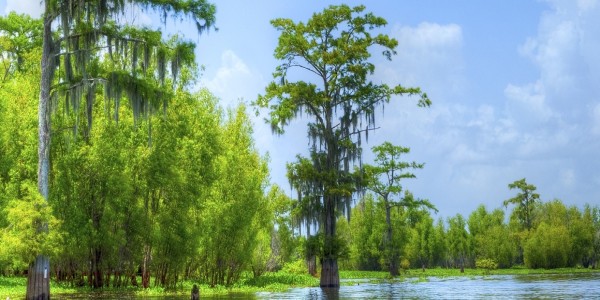
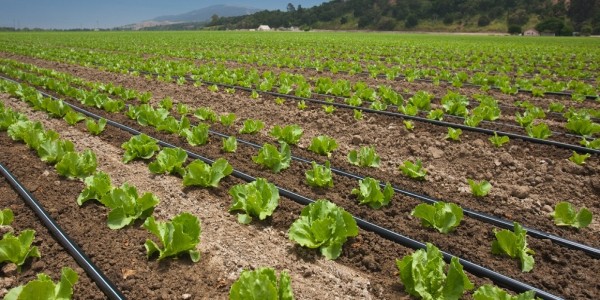
The Bachelor degree in Environmental Education shares the philosophy of the National Policy on Education geared towards self-realization, better human relationship, self and national economic efficiency, effective citizenship, national consciousness, national unity, social and political progress, scientific and technological progress and national reconstruction. The programme is philosophy therefore seeks to produce graduates who are worthy in character and learning, as well as being policy makers who are committed to ensuring sustainable management of the environment in Nigeria.
Objectives
The objectives of the programme are, among others, to:
- enables our students to develop the skills, knowledge and experience to make a difference in their World.
- enables our students to learn how personal and societal choices affect the earth's ecosystems and inhabitants.
- helps to inspire a love of nature, often through outdoor immersion programmes and adventure outings.
- is designed to shape the next generation of Environmentalists, Educators, consultants and environmental industry leaders.
- exposes our students to learning the contemporary problems of the environment (forestation, desertification, erosion control, oil spillage and pollution) as well as proffering solutions to these problems.
- will equip the trained and skilled human resources to solve present and emerging global environmental problems through monitoring, surveillance and management.
Programme specializations in the area of Environmental Education are:
- Environmental Education (Biology Option)
- Environmental Education (Chemistry Option)
- Environmental Education (Physics Option)
What Are Some Career Options in Environmental Education?
You could work as an:
- environmental educator for secondary and tertiary institutions,
- environmental conservation scientist
- disaster management experts
- environmental consultants; and
- park ranger and historical sites specialist.
Introduction
The Department of Environmental Education of Osun State University came to being during the 2022/2023 academic session. The Bachelor’s Degree in Environmental Education Programme seeks to produce graduates who are worthy in character and learning, as well as being policymakers who are committed to ensuring sustainable management of the environment in Nigeria.
Candidates are to possess School Certificate/GCE with passes at Credit Level or above in five subjects including English Language and Mathematics obtained in not more than two (2) sittings or ii) Teachers’ Grade II Certificate with passes at Credit or Merit Level in five subjects, including English Language and Mathematics. Since this is a professional programme at secondary school level, students will have major or minor teaching subjects and they must have credit pass in their teaching subjects (Physics, Chemistry, Biology, Economics, and Government).
Direct Entry Candidate
Candidates to be eligible for Direct Entry Admission must possess NCE or equivalent in two relevant subjects at Credit or Merit level. In addition, must possess i) School Certificate/GCE, O’Level passes in at least five other subjects at credit level including English Language and Mathematics at not more than two sittings or ii) Teachers’ Grade II with Credit or Merit in five relevant subjects including English Language and Mathematics. Students must have credit pass in their teaching subjects (Physics, Chemistry, Biology, Economics, and Government
B.Ed. Educational Technology
The Philosophy for Educational Technology
The philosophy of the B.Ed. Educational Technology is centered on the promotion of the study of Educational Technology and its cognate subjects as academic disciplines in an effort to satisfy the dire need for qualified teachers for the effective implementation of the National Policy on Education at the post-primary school level.
Objectives
The objectives of the Educational Technology programme at the University level are to produce highly qualified Teachers knowledgeable in both the processes of Educational Technology and capable of inculcating these in the students. Students should have the following competencies:
- Ability to demonstrate competence in instructional design, educational software development and multimedia authoring.
- Ability to select and integrate distance learning resources
iii. Ability to develop, select and integrate teaching and learning resources in the classroom.
- Skills in research abilities in different areas of instructional and learning technologies.
- Ability to conduct research related to optimal efficiency and effectiveness of instructional and learning technologies.
- Ability to provide a variety of community services through seminars, symposia, workshops
Career Opportunities in Educational Technology
- Technology Integration Specialist in primary, secondary and higher institution
- Instructional Designers
- Educational Technology Specialist
- Content Creators/Developer
- E-Learning Developers
- Educational Software Developer
- EdTech Consultant
- Educational Technology Researcher
- Online Learning Coordinator
- Instructional Technology