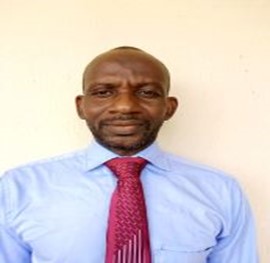
 BELLO Dauda Akanni
Email:
Mr. Dauda A. BELLO is an esteemed professional and accomplished accountant with a decade-long membership in the Institute of Chartered Accountants of Nigeria. His expertise spans various fields, including Accounting, Auditing, Cloud Computing, and Data Management.
He has gained valuable experience in both the private and public sectors in Nigeria. Notably, he served as the Assistant Manager (Audit) at TGI (CHI) for two years, where he handled pre and post-auditing functions at the company's head office and various branches and outlets. His attention to detail and expertise in auditing contributed to the effective financial management of the organization.
This skilled accountant also played a key role as the pioneer Accountant for the Centre for Sustainable Development at the University of Ibadan. During the period of his appointment, he successfully established a robust database and internal control system, earning recognition for his award of meritorious services to the Centre and the university as a whole. He was later transferred to the Expenditure Control Unit of the Bursary Department at the University, further enhancing his knowledge and experience in financial management.
Since joining Osun State University, he has actively contributed to several important initiatives within the Bursary Department. He has been involved in the Computerization, Strategic, and Career Structure Review committees, showcasing his dedication to improving the department's operations and effectiveness. He had been Head of the Expenditure Control Unit in the Bursary Department.
Currently, this accomplished professional holds the position of Head of Budget & Planning Unit in the Bursary Department at Osun State University. In this role, He oversee and manage preparation of University Budget, ensuring adherence to budget preparation processes, regulations and best practices.
In summary, this esteemed professional is a highly skilled accountant with expertise in Accounting, Auditing, Cloud Computing, and Data Management. His significant experience in both the private and public sectors, as well as his notable accomplishments in financial management and internal controls, make him an invaluable asset to Osun State University's Bursary Department.
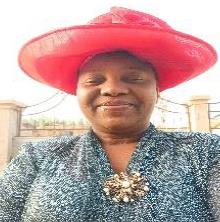 OLUWASANMI Bolaji Ajike
Email:
My name is Bolaji Ajike OLUWASANMI, a Senior Assistant Registrar in the Centre for Part-Time and Advanced Studies (CPAS). I joined the services of Osun State University in 2007 as a pioneer staff as Administrative Officer.
I hold HND Statistics, B.Sc. Mathematics, Master in Business Administration (MBA) and M.Sc. Sustainable Development Practice.
I was posted to Admissions Office to be assisting the Admissions Officer, from 2007 to 2015. In 2015, responded to an advertisement by the Institution and I was offered appointment as an Administrative Officer 1, I was then posted to the College of Agriculture as the College Secretary from 2015 to 2017. In October, 2017, I was redeployed to Student Affairs unit as the Student Affairs Officer until September 2022.
On 26th September, 2022, I was posted to the Centre for Human Resource Development and Lifelong Learning (CHRDLL) which later changed to Centre for Part-Time and Advanced Studies where I am till date.
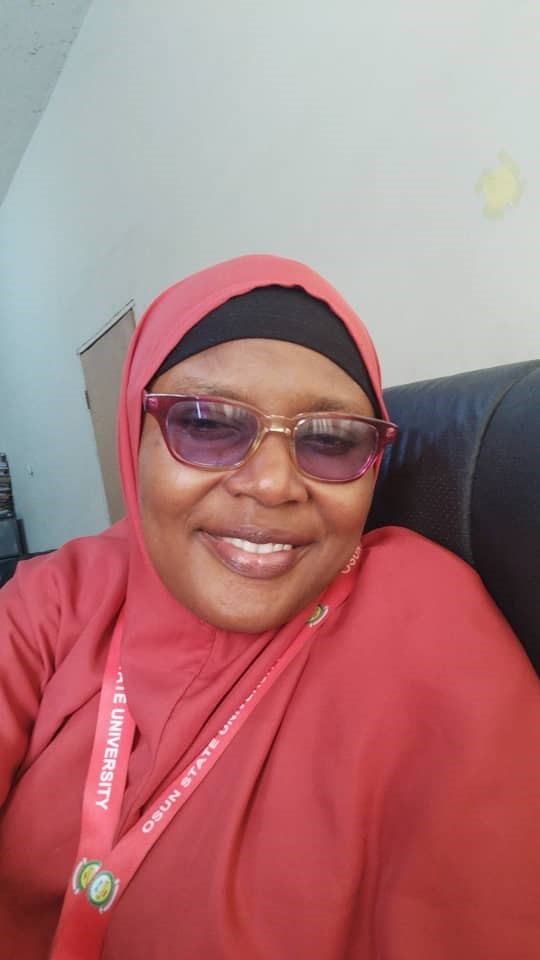 ABDULAZEEZ-ABDULWAHAB Kafayat Opeyemi
Director
Human Resources and Development
Email:
I joined the services of Osun State University on October 22, 2007, as an Administrative Officer II, and have since ascended through the ranks to attain the post of a Deputy Registrar, effective October 1, 2022.
ACADEMIC QUALIFICATIONS
I obtained a Bachelor of Science and a Master degree in Business Administration from the prestigious Ahmadu Bello University, Zaria, Kaduna State, in 2002 and 2024 respectively.
In the sojourn of my career, I have held various positions within the University, including: the Pioneer Student Affairs Officer for the College of Management and Social sciences (2007-2011); the Pioneer Faculty Officer for the Faculty of Engineering (2011-2015), the Senior Assistant Registrar, Registrar's office (2015-2020), the Head, Academic Staff Establishment Unit of the Personnel Affairs Unit (Now Directorate of Human Resource and Development), (2020-2022) and thereafter as the Head, Registrar's office (2022-2024). I have served as the Secretary to several statutory and Ad-Hoc Committees of the University.
On November 11, 2024, I was posted to the Directorate of Human Resource and Development where I currently serve the Head of the Directorate and clerk several statutory meetings of Appointments and Promotions Committee, Regularisation intervew, Interactive sessions for appointment of Temporary staff and other Ad-Hoc Committees as may be assigned by the Registrar or the Vice Chancellor.
Mrs. AbdulAzeez -AbdulWahab is married and blessed with children.
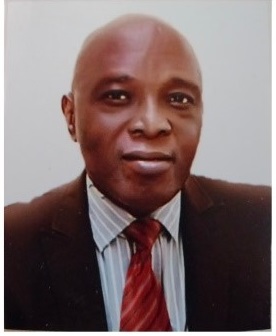 ADUFE Victor Oluwaloni
Deputy Registrar
Email:
I joined the services of Osun State University on October 22, 2007, as an Administrative Officer II, and have since progressed through the ranks to attain the position of Deputy Registrar, effective October 1, 2023.
My academic credentials include a Bachelor of Science degree in Politics, Philosophy, and Economics from the prestigious Obafemi Awolowo University (formerly University of Ife), Ile-Ife, and a Master's degree in Administration from the Federal University of Technology, Akure.
Throughout my career, I have held various positions within the University, including: Acting College Secretary at the College of Education, Ipetu-Ijesa Campus; Officer-in-Charge of Administrative & Technical Staff matters and Academic Staff matters in the Personnel Affairs Unit of the Registry (now Human Resource & Development). I served as the Secretary of the revised Conditions of Service and currently member, Staff Disciplinary Committee.
In December 2018, I was assigned to the Vice Chancellor's Office, where I currently serve as Director, Vice Chancellor's Office and Corporate Services and clerk Principal Officers’ meeting; Management meeting; Development Committee meeting and Vice Chancellor’s Office Review Panel.
Mr. Adufe is married with children.
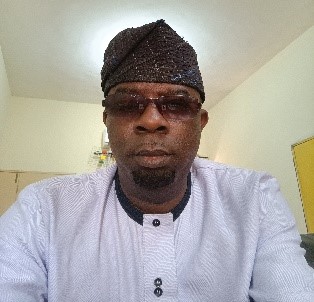 ADEBAYO John Olusegun
Deputy Registrar
Email:
John Olusegun ADEBAYO hails from Ile-Ife, Ife East Local Government Area, of Osun State, Nigeria. He holds a Master Degree in Business Administration (MBA) from the Federal University of Technology, Akure, in 2004, Master of Science (M.Sc.) in Business Administration (Entrepreneurship Option) from the National Open University of Nigeria in 2019 and a Bachelor Degree in Agricultural Economics (with bias in Resource Economics) from the prestigious Obafemi Awolowo University, Ile-Ife in 1999. He also holds Certificate of Professional Development from the London Institute of Skills Development, Uk in 2022 and Certificate of Professional Development in “Leadership in Workplace” from the Global Skills Hub, United Kingdom, Uk in 2023. He is a full member of the Chartered Institute of Public Management of Nigeria (CPM), full member, Association of the Nigerian University Professional Administrators (ANUPA) and Member, Association of University Administrators (AUA) UK. He has attended many local and international Conferences.
Mr. John Adebayo joined the services of Osun State University as a pioneer staff on the 22nd October 22, 2007 as an Administrative Officer and was re-graded as an Administrative Officer 1 on the 1st of October, 2008. He rose through the ranks to the position of a Deputy Registrar on October 1, 2022. He is currently the College Secretary, College of Health Sciences, Osogbo Campus representing the University Registrar in the affairs of the College. He is the Secretary to statutory and ad-hoc committees of the College and some committees of the University, and the supervising officer to the three Faculty Officers in the Faculty of Clinical Science, Basic Medical Sciences, Basic Clinical Sciences and all the non-teaching staff under the College.
John Adebayo has worked in different capacities in many Campuses and sections of the University over the years. He was a Student Affairs Officer, College of Humanities and Culture, Ikire between October, 2007 and October, 2010; Administrative Officer in the College of SET Secretary`s Office 2010-2011; College Secretary, College of Management and Social Sciences, Okuku May 2015 - May 2022; College Secretary, College of Law June 1, 2022 – November 8, 2024. He was once the Administrative Secretary, Center for Human Resource Development and Lifelong Learning (CHRDLL) now Centre for Part-time Degrees and Advanced Studies (2011 - 2015), where he contributed to the establishment and concretizing of running of Bridge Degree Programme in Accounting, Banking and Finance, Policy Write-Ups and documentation for the establishment of IJMB, JUPEB, and the Open and Distance Learning (ODL) Programmes of the Centre. He was an Acting Secretary, Centre for Entrepreneurial Studies, Okuku Campus (2015-2018).
He has also at one point or the other served as Secretaries to some strategic Committees of the University such as the Secretary, University Inter-Collegiate Debate and Essay Competitions Programmes (2009-2016), member, Joint Committee of Management and Unions on Earned Allowance ( 2016); Committee on University Fund Raising (2016), Committee of Council and Management on Unions` inter-relation matters; Secretary, Union Committee on Review of Conditions of Service; member, Committee on Review of Career Structure; Chairman Management Committee of Osun State University Hostel, Ajegunle for the management and regularization of Tenancy (2025-till date); Secretary, University Medical Board 2024 till date, Secretary, SSANU (2016 - 2022) and Chairman SSANU (2022-till date), among others.
He is an Administrator with good knowledge of the skills, ethics, culture, regulations, principles and practices of the university administrative procedures. His areas of interests are Administration, Human Resource Management and entrepreneurship with four publications.
College of Health Sciences, Osogbo.
Osun State College of Health Sciences is the Campus with largest student population in the University. The office of the College Secretary is under the supervision of the Registrar of the University and the Provost of the College. The College Secretary reports to the Provost for the day-to-day administrative activities of the College.
The Academic set up of the College comprises of the Faculty of Clinical Sciences, Faculty of Basic Medical Sciences; Faculty of Basic Clinical Sciences; and the newly established Faculty of Nursing Sciences. The Faculty of Basic Medical Sciences has eight (8) departments, Faculty of Clinical Sciences has seven (7) departments, Faculty of Basic Clinical Sciences has five (5) departments while Faculty of Nursing Sciences has just been delineated to five (5) departments. Other sections of the College are the Medical Library, Works, Security, ICT, Biomedical Engineering and Health Centre.
The College runs the following academic programmes (a) Bachelor of Medicine and Bachelor of Surgery (MBBS) (b) Bachelor of Nursing Science (BNSC) (c) Bachelor of Medical Laboratory Science (BMLS) (d) Bachelor of Technology (Anatomy) (B. Tech) (e) Bachelor of Technology (Physiology) (B. Tech) (f) Bachelor of Science in Public Health (g) Bachelor of Science in Pharmacology (h) Bachelor of Science in Nutrition and Dietetics (i) Bachelor of Science in Radiography and Radiation Science (j) Bachelor of Environmental Health Sciences (k) Bachelor of Health Information Management. The College also has relationship with the following professional and regulatory bodies – MBBS - Medical and Dental Council of Nigeria (MDCN) BNSC- Nursing and Midwifery Council of Nigeria MLS—Medical Laboratory Council of Nigeria Radiography and Radiation Science-
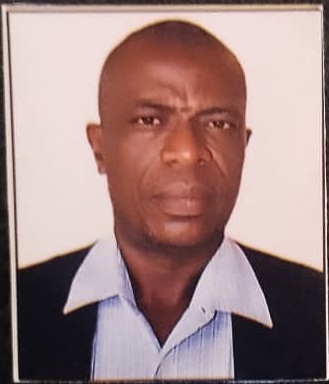 ADESIGBIN Akeem Adeyinka
Deputy Registrar
+2348033965380
Email:
Mr. ADESIGBIN Akeem Adeyinka is a Deputy Registrar in Osun State University, Osogbo. He holds National Certificate in Education from Osun State College of Education in English Language/ Yoruba in the year 1996; Bachelor of Art, (Ed) English Language from Adeyemi College of Education, Ondo in the year 2000 and M.Ed (Educational Administration and Planning) in the year 2005 from Obafemi Awolowo University, Ile-Ife; Msc. in Peace and Conflict Studies from the Institute of Global Affairs and Sustainable Development in the year 2021 and currently a Ph.D student in Peace and Conflict Studies. He is also a Psychologist. He worked as Administrative Officer and rose to Acting Manager in Obafemi Awolowo Conference Centre and Guest Houses, Ile-Ife and worked as a part-time lecturer at Osun State College of Education, Ilesa. He taught in different secondary schools in Osun and Ondo States.
He is currently the College Secretary in the Colleges of Management and Social Sciences, Okuku Campus of the University. He has attended several local and international conferences and training workshops and published in reputable journals which can be viewed in Research Gate.
He has represented the State at National and International levels. He is also a community leader, a motivator, peace expert, policy maker and educationist.

Osun State University (UNIOSUN) continues to strengthen its reputation as a center of academic excellence and global collaboration, as its immediate past Deputy Vice-Chancellor (Academic, Research, Innovation, and Partnerships), Professor Anthony Kola-Olusanya, has been awarded a prestigious Visiting Fellowship at the University of Warwick, United Kingdom.

Osun State University (UNIOSUN) continues to strengthen its reputation as a center of academic excellence and global collaboration, as its immediate past Deputy Vice-Chancellor (Academic, Research, Innovation, and Partnerships), Professor Anthony Kola-Olusanya, has been awarded a prestigious Visiting Fellowship at the University of Warwick, United Kingdom.

The Vice-Chancellor of Osun State University, Professor Odunayo Clement Adebooye, has extended warm felicitations to Muslims within the University community and across the Nation on the joyous occasion of Eid-el-Fitr, marking the successful completion of the Ramadan fast.

The Vice President of EndFund, Kimberly Kamara, and the Senior Associate, Programmes, Mr. Moses Aderogba, on Monday, March 10, 2025, paid a working visit to the Vice-Chancellor of Osun State University (UNIOSUN) to inspect the institution’s research facilities and assess the progress of scientists working on grants awarded by the global philanthropic organization.
More...

The Vice President of EndFund, Kimberly Kamara, and the Senior Associate, Programmes, Mr. Moses Aderogba, on Monday, March 10, 2025, paid a working visit to the Vice-Chancellor of Osun State University (UNIOSUN) to inspect the institution’s research facilities and assess the progress of scientists working on grants awarded by the global philanthropic organization.

Osun State University continues to receive global recognition as one of the University’s senior confidential secretaries, Mrs. Titilayo Eniola Fayemi, has been selected for a fully funded training programme at the English and Foreign Languages University, Hyderabad, India.

Osun State University continues to receive global recognition as one of the University’s senior confidential secretaries, Mrs. Titilayo Eniola Fayemi, has been selected for a fully funded training programme at the English and Foreign Languages University, Hyderabad, India.

In a remarkable recognition of academic excellence, the Nigerian Army has selected Dr. Adesola Adesote, an Associate Professor in the Department of History and International Studies at Osun State University (UNIOSUN), to join a prestigious research team tasked with documenting the life and legacy of the late Chief of Army Staff, Lieutenant General Taoreed Abiodun Lagbaja, CFR, NAM.